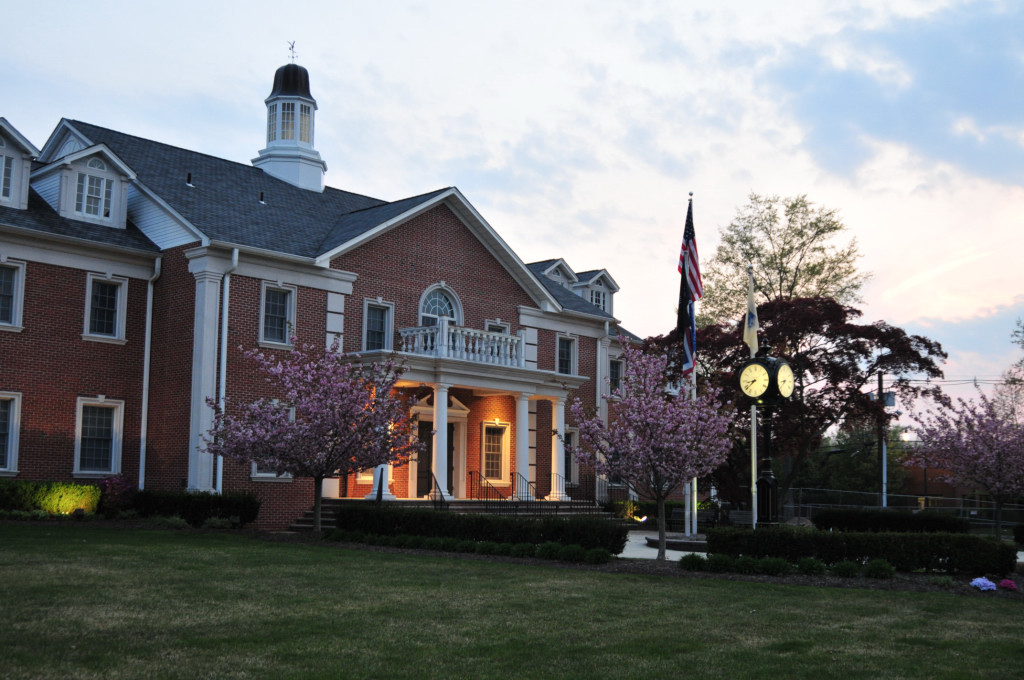
On the night of July 28, 1913, two days after the Feast of St. Ann, the priests of St. Ann's Monastery knelt in prayer as the coal mines beneath the building on the plateau above West Scranton split open. Mining experts had warned that a huge collapse would carry the monastery down the hillside. After a night of rumbling earth and flying coal dust, two enormous boulders rolled into place beneath the foundation at daybreak, closing the fissures and stabilising the ground. The shrine's own history recounts the event as the night St. Ann saved the monastery.
The devotion that gave the shrine its identity began eleven years later, in November 1924, when a handful of the faithful asked the rector of the monastery for a weekly novena honouring St. Ann. A young Passionist priest, Father John Joseph Endler, C.P., held the first services in the monastery parlor. Within weeks the room overflowed. The Scranton Fire Department provided a tent, then a wooden chapel seating two hundred was built near the monastery entrance. The crowds drove the decision to break ground on a permanent church in 1927.
The Basilica of the National Shrine of St. Ann, dedicated on April 2, 1929, stands on the ten-acre plateau known as the Round Woods. Pope John Paul II raised the shrine to the status of a minor basilica by a decree of the Holy See dated 29 August 1996; the solemn liturgical proclamation took place on 27 October 1997, making it the first basilica in the Diocese of Scranton. The United States Conference of Catholic Bishops designated it a National Shrine. Each July 17 through 26, the Solemn Novena draws thousands of pilgrims for ten consecutive days, ending on the Memorial of Saints Joachim and Ann.
📜 History & Spiritual Significance
In 1902, Bishop Michael J. Hoban of the Diocese of Scranton invited the Passionists — the Congregation of the Passion, C.P. — to the anthracite mining region of northeastern Pennsylvania. After a temporary residence at Harvey's Lake through the summer and fall, the community rented a house on Scranton's west side. A plateau of ten acres, known as the Round Woods and standing high above the city, was chosen by the Passionists and Bishop Hoban. Chosen on the feast of the Virgin Mary's birthday, the new home was named in honour of St. Ann, Mother of Mary and grandmother of Jesus.
Bishop Hoban celebrated the first Mass at the monastery on March 25, 1904. The monastery was dedicated on July 2, 1905, designed by the Wilkes-Barre architect Owen McGlynn and financed by other Passionist monasteries and the people of Scranton. The community had barely settled when disaster struck: on August 15, 1911, a coal mine subsidence seriously damaged the monastery. A second slide in 1913 forced evacuation. Mining experts predicted that the ground beneath the building would collapse, carrying the monastery eastward down the hill. On the night of July 28, 1913, the priests and laity prayed through the night. At dawn, two huge boulders rolled into place beneath the building, closing the fissures. The monastery's foundation was reinforced, and the building rededicated in 1916.
The Solemn Novena began in 1924, when a small group asked the monastery rector for a weekly devotion to St. Ann. Father John Joseph Endler, C.P., the Passionist priest most closely identified with the Novena, held the first services in the monastery parlor. The devotion grew by word of mouth among the faithful rather than by Passionist promotion — the shrine's own account calls it "a people's novena," born in the hearts of those who requested it. As the crowds grew, the community broke ground on a permanent church in 1927. The Romanesque Revival building was dedicated on April 2, 1929. The Novena marked its centennial in 2024, a century after Father Endler first gathered the faithful in the monastery parlor.
Pope John Paul II raised the shrine to the status of a minor basilica by a decree of the Holy See dated 29 August 1996. The solemn liturgical proclamation followed on 27 October 1997, making it the first basilica in the Diocese of Scranton. The United States Conference of Catholic Bishops designated it a National Shrine. St. Ann — mother of the Virgin Mary, grandmother of Jesus — is invoked as patroness of mothers, grandmothers, and homemakers. Pilgrims come with intentions for family, health, and children; the shrine speaks of couples who prayed for a child and call their son or daughter a "St. Ann's baby." On the feast day, groups of pilgrims walk to the shrine from surrounding towns — a group from Dunmore leaving at four in the morning to walk three miles, a group from Pittston setting out at midnight to walk eight.
☩ Pilgrimage Sites in Scranton
Basilica of the National Shrine of St. Ann
The shrine occupies a single ten-acre campus on the Round Woods plateau above West Scranton. The Upper Basilica, the principal worship space, houses the Solemn Novena services and Sunday Masses; a sanctuary arch inscribed "Through the intercession of St. Ann may God bless you in every way" spans the altar. Beneath it, the Lower Basilica holds a candle-lighting devotion to St. Ann. On the grounds, pilgrims walk the outdoor Stations of the Cross and light candles at the grotto. The adjoining Passionist monastery, the institutional home of the shrine, has stood on the site since 1905. A relic of St. Ann is offered for individual blessing after each Novena devotion — the feature most pilgrims associate with a visit to Scranton.
🕯️ Annual Feast Days & Celebrations
Solemn Novena to Saint Ann — July 17-26
The defining event of the shrine. For ten consecutive days each July 17 through 26, the Solemn Novena draws thousands of pilgrims to the basilica for Masses, Novena devotions, and the sacrament of reconciliation. The devotion is popularly called a "novena" though it runs ten days, not nine — the shrine's own usage. Daily Masses and Novena devotions fill the morning, afternoon, and evening; confessions are heard in the Lower Basilica before and after each service. The individual blessing with the relic of St. Ann follows each devotion.
Feast of Saints Joachim and Ann — July 26
The principal pilgrimage day and the Solemn Closing of the Novena. July 26 is the Memorial of Saints Joachim and Ann in the General Roman Calendar, a fixed date that does not shift with the liturgical cycle. The day begins with early morning Masses and builds to the Pontifical Solemn Closing Mass celebrated by the Bishop of Scranton in the evening. Masses in Polish, Tamil, and Spanish reflect the ethnic pilgrim communities the shrine draws. Within the Novena's ten-day run, the Anointing of the Sick, a Byzantine Rite Divine Liturgy, and a Mass for Infants, Children and Grandparents fall on fixed calendar days. The Novena is broadcast on Catholic Television and local stations, extending the devotion to homebound pilgrims — a tradition at the shrine that began with radio broadcasts in the 1940s.
🛏️ Where to Stay
St. Ann's Monastery operates no guesthouse. Pilgrims stay in commercial hotels in downtown Scranton, a short drive east of the basilica.
Radisson Lackawanna Station Hotel Scranton ⭐⭐⭐ — A converted 1908 Delaware, Lackawanna & Western railroad station with a Tiffany-glass barrel-vaulted ceiling, 2.6 miles east of the basilica in downtown Scranton. Website ∙ Reserve this hotel
Hilton Scranton & Conference Center ⭐⭐⭐⭐ — Full-service hotel with restaurant and airport shuttle, the closest of the three by road at 2.4 miles east of the basilica. Website ∙ Reserve this hotel
Comfort Suites Scranton near Montage Mountain (hotel) — All-suites hotel 4.1 miles south of the basilica off I-81, with free hot breakfast, indoor pool, and free parking — the best option for families driving to Scranton. Website ∙ Reserve this hotel
More hotels in Scranton on Booking.com →
Accommodation available to book near Scranton. Pilgrim houses and religious guesthouses are listed above — many take bookings directly and do not appear on booking sites.
🚗 Getting There
By Air: Wilkes-Barre/Scranton International Airport (AVP) in Avoca is approximately 8 km south of the basilica. Philadelphia International (PHL) is 174 km south; Newark Liberty (EWR) is 150 km southeast.
By Car: The basilica is in West Scranton, accessible from Interstate 81. From New York City, take I-80 west to I-380 north to I-81 north, approximately 161 km. From Philadelphia, take the Northeast Extension of the Pennsylvania Turnpike (I-476) north to I-81 north, approximately 167 km. From Pittsburgh, take the Pennsylvania Turnpike (I-76) east to I-81 north.
By Bus: Greyhound and Martz Trailways operate service to Scranton from New York City and Philadelphia.
📚 Further Reading
Marion Amberg. Monuments, Marvels, and Miracles: A Traveler's Guide to Catholic America — The standard traveller's guide to Catholic shrines and devotional sites across the United States, situating the St. Ann Novena in the wider landscape of American Catholic pilgrimage.
Ven. Anne Catherine Emmerich. The Life of the Blessed Virgin Mary — Mystic visions of Mary's life that give her mother, St. Ann, a central place, connecting a pilgrim to the shrine's devotional heart.
🎥 Recommended Videos
St. Ann's Solemn Novena 2022 — Short highlights reel from the shrine's own YouTube channel, a glimpse of the Novena a prospective pilgrim will actually watch.
Saint Ann's Novena 2023 — Diocese of Scranton overview of the 2023 Novena, giving a second voice and year to the shrine's account.
St. Ann's Novena Closing Mass July 26, 2019 — Full closing Mass from the Diocese of Scranton channel, the climactic July 26 liturgy that ends the Novena.
🔗 Useful Links
St. Ann's Monastery and Shrine Basilica — Official shrine website with Mass schedules, Novena information, and shrine history.
St. Ann's Novena — Dedicated Novena site with the annual schedule and devotion resources.
Diocese of Scranton — Diocesan information, parish directory, and Novena announcements.
Passionist Historical Archives — Historical summaries and reflections on the Passionist community's presence in Scranton and the Novena tradition.
🧭 Nearby Pilgrimage Destinations
Middletown (105 km east) — The National Shrine of Our Lady of Mount Carmel, a major Marian and Carmelite pilgrimage site in the Hudson Valley.
Doylestown (128 km south) — American Częstochowa, a Polish-American pilgrimage center housing a Black Madonna icon, run by the Pauline Fathers since 1955.
Stirling (128 km southeast) — The Shrine of Saint Joseph in the Watchung Mountains of New Jersey, run by the Missionary Servants of the Most Holy Trinity.
Graymoor (148 km east) — Franciscan motherhouse on a Hudson Valley hilltop, home of the St. Anthony National Shrine and the Week of Prayer for Christian Unity.
New York City (161 km east) — St. Patrick's Cathedral, the incorrupt body of St. Frances Xavier Cabrini, and shrines honoring two American saints.
🪶 Closing Reflection
"Today we celebrate the feast of the grandparents of Jesus. The Lord has gathered all of us together precisely on this occasion, so dear to you and to me. It was in the home of Joachim and Anne that the child Jesus came to know his older relatives and experienced the closeness, tender love and wisdom of his grandparents."
— Pope Francis, Homily on the Feast of Saints Joachim and Anne, Edmonton, 26 July 2022