In October 1898, an Episcopal minister named Lewis Thomas Wattson climbed a fog-wrapped hilltop in Garrison, New York, and made a covenant with a young novice named Lurana White to found a new religious community dedicated to Christian unity. He occupied a ramshackle farmhouse he called the "Palace of Lady Poverty." She moved into a building on the hill they named Graymoor — gray for the Franciscan habit, moor evoking the stark open landscapes of their Franciscan imagination. No one who saw those two figures on that cold autumn hillside, poor and without institutional backing, could have guessed that within a decade they would be received into the Catholic Church as an entire religious community, or that the prayer initiative Wattson launched from that hilltop would grow into the Week of Prayer for Christian Unity, observed today by hundreds of millions of Christians worldwide.
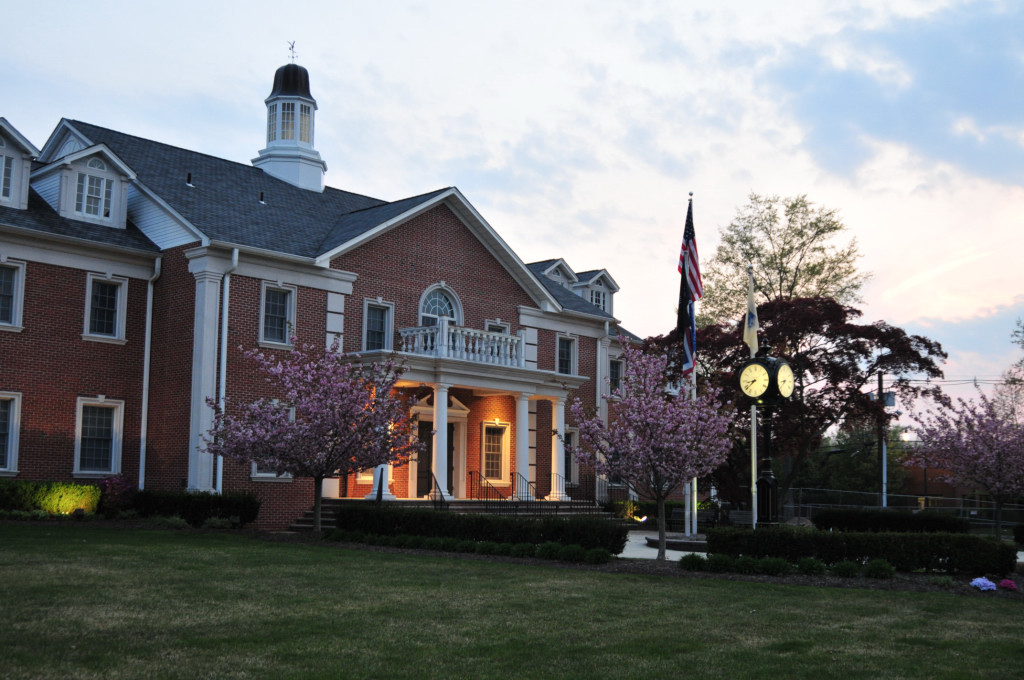
The hilltop above Garrison, rising 700 feet over the Hudson Valley, is now the motherhouse of the Franciscan Friars of the Atonement — the Society of the Atonement — and home to one of the most visited Catholic shrines in the northeastern United States. The St. Anthony National Shrine, dedicated in 1960, draws tens of thousands of pilgrims annually to pray before a large marble statue of the Franciscan saint. Beside it stands the St. Francis Chapel, whose altar once marked the very spot on Mount Alverna in Italy where St. Francis received the stigmata in 1224. The Appalachian Trail crosses the property's lower slopes, threading through the same forests where Wattson once walked barefoot in imitation of the Poverello.
Graymoor is a place layered with purpose: part national shrine, part retreat center, part ecumenical institute, part ministry to the homeless. The Friars' St. Christopher's Inn has offered shelter to men in recovery from addiction for more than a century. The campus grounds — chapels, candle grotto, woodland paths — are open dawn to dusk, year round, to people of all faiths.
📜 History & Spiritual Significance
The story of Graymoor begins not in New York but in Omaha, Nebraska, where Lewis Thomas Wattson was born in 1863 into a long line of Episcopal clergymen. Ordained an Episcopal priest in 1886, he became increasingly convinced that the fragmented state of Christianity was a scandal — that the visible unity of the Church was not merely desirable but theologically required. He began corresponding with other Anglicans who shared his concern, among them Lurana White, a novice in the Episcopal Sisters of the Holy Child Jesus in Albany.
When the two met at the White family home in Warwick, New York, in October 1898, they agreed to establish the Society of the Atonement at Graymoor. The word "atonement" was central to their vision, understood in its etymological sense: at-one-ment, the making-one of what had been divided. Their rule would follow St. Francis. Their purpose would be the reunion of Christendom.
The early years were precarious. Wattson, who took the religious name Father Paul, lived in near-destitution on the hilltop. White, who became Mother Lurana, begged for donations to keep the small community alive. In 1907, Father Paul proposed a radical ecumenical initiative: an annual Octave of Prayer, eight days of prayer for Christian unity spanning from the Feast of the Chair of St. Peter (January 18) to the Feast of the Conversion of St. Paul (January 25). The first Church Unity Octave was observed at Graymoor in January 1908. Pope Pius X blessed the initiative; Pope Benedict XV in 1916 encouraged its observance throughout the entire Catholic Church. Renamed the Week of Prayer for Christian Unity, it is now jointly coordinated by the Vatican's Pontifical Council for Promoting Christian Unity and the World Council of Churches.
But the most dramatic moment in Graymoor's early history came in October 1909, when Father Paul, Mother Lurana, and their entire small community were received into the Roman Catholic Church by Monsignor Joseph Conroy in Ogdensburg, New York. It was, as contemporaries noted, the first time since the Reformation that an entire religious community had become Roman Catholics on a corporate rather than an individual basis. The Friars were incorporated into the Franciscan Order; the Sisters became a pontifical congregation. The hilltop in Garrison, once an Anglican experiment, was now Catholic soil.
Father Paul continued his ecumenical work from within the Church, publishing The Lamp, a magazine promoting Christian unity and mission. He established the Union-That-Nothing-Be-Lost to assist foreign missionaries, and opened St. Christopher's Inn to provide food and shelter to the homeless men who appeared at the monastery gate — a ministry that continues today as a residential recovery program. He died on February 8, 1940, at the age of 76. A cause for his canonization was opened in 1953; he holds the title Servant of God.
Mother Lurana died in 1935, five years before Father Paul, after spending nearly four decades building the Sisters' branch of the community. Today the Franciscan Sisters of the Atonement operate missions in the United States, Canada, Italy, Japan, the Philippines, and Brazil.
The St. Anthony National Shrine was formally dedicated on June 12, 1960, fulfilling a vow the Friars had maintained since the community's founding — to pray the novena to St. Anthony of Padua every day without exception. That daily novena, unbroken since 1898, continues to be prayed by the community. The shrine's large marble statue, depicting St. Anthony holding the Christ Child, stands at the summit of the hilltop campus, flanked by thousands of votive candles left by pilgrims.
☩ Pilgrimage Sites in Graymoor
St. Anthony National Shrine
Dedicated on June 12, 1960, and marking a site of continuous novena prayer since the community's founding in 1898, the St. Anthony National Shrine occupies the highest point of the Graymoor campus. A large marble statue of St. Anthony of Padua holding the Christ Child presides over an open-air shrine and candle grotto where pilgrims leave thousands of votive lights. The surrounding walkways and contemplative garden offer views across the Hudson Valley. The Friars' unbroken century-long novena to St. Anthony — prayed daily since Father Paul's first years on the hilltop — gives this place a quality of accumulated petition unlike any other Antonine shrine in the United States.
St. Francis Chapel
Within the main chapel building stands an altar of singular provenance: it was transported from Mount Alverna in Italy, where it originally marked the precise location on the rocky summit where St. Francis of Assisi received the stigmata in September 1224. Above the altar rises a beloved statue of the "Poverello," modeled on a work by Andrea della Robbia. For pilgrims devoted to the Franciscan tradition, this chapel offers a direct material link to the founding wound of the Franciscan charism.
Holy Spirit Chapel
Situated at the summit of Mount Atonement, at approximately 700 feet elevation, the Holy Spirit Chapel offers panoramic views of the Hudson Valley and Putnam County highlands. It serves as the community's primary liturgical space for daily Mass and the Divine Office. Pilgrims may attend morning Mass with the Friars throughout the year.
Stations of the Cross and Woodland Paths
A traditional Stations of the Cross route winds through the wooded hillside below the main campus buildings, connecting the shrine area to the quieter eastern slopes of the property. The natural woodland setting — mixed hardwood forest typical of the Hudson Highlands — lends the meditative walk a quality of solitude and depth that enclosed Stations seldom achieve. The Appalachian Trail crosses the lower property, and a designated AT camping area on the grounds has hosted hikers and pilgrims since 1972.
🕯️ Annual Feast Days & Celebrations
Feast of St. Anthony — June 12–15
The principal annual pilgrimage to Graymoor, drawing thousands of visitors to the St. Anthony National Shrine for a multi-day celebration spanning the saint's feast (June 13). Solemn outdoor Mass, candlelight vigil, and the tradition of leaving votive candles on the steps of the shrine — by the celebration's final evening, thousands of flames illuminate the hilltop. The Friars lead the Miraculous Responsory and the Thirteen Tuesdays novena. Pilgrims travel from across the tri-state area and beyond; crowds are substantial, and arriving early in the morning is advisable.
Week of Prayer for Christian Unity — January 18–25
The observance that Graymoor gave to the world. Each year the Friars mark the Week of Prayer in the season they inaugurated in 1908 with special ecumenical services, reflection evenings, and liturgies incorporating the annual ecumenical theme set by the Vatican and the World Council of Churches. The dates span the feast of the Chair of St. Peter (January 18) to the feast of the Conversion of St. Paul (January 25), as Father Paul first proposed them. January cold and spare liturgical simplicity make this a contemplative rather than festive pilgrimage.
🛏️ Where to Stay
Holy Mountain Franciscan Retreat Center (pilgrim accommodation) — Overnight retreat accommodation on the Graymoor campus, run by the Franciscan Friars of the Atonement and known until recently as the Graymoor Spiritual Life Center. Weekend and midweek retreats include overnight stays and all meals; pre-registration is required at least one week in advance. Website
The Bird & Bottle Inn (guesthouse) — A colonial inn operating since 1761 in a stage-coach-era building on Old Albany Post Road in Garrison, less than 2 km from the Graymoor entrance. Five rooms, full restaurant, formal gardens. One of the oldest continuously operated inns in New York State, set directly on the historic road that once connected New York City to Albany. Website
Pig Hill Inn (B&B) — Nine individually decorated rooms in a historic building on Main Street in Cold Spring village, approximately 8 km north of Graymoor. The inn occupies the center of a well-preserved 19th-century Hudson River town, walkable to the Cold Spring train station. Website
More hotels in Graymoor on Booking.com →
Accommodation available to book near Graymoor. Pilgrim houses and religious guesthouses are listed above — many take bookings directly and do not appear on booking sites.
🚗 Getting There
By Train: Metro-North Hudson Line from Grand Central Terminal to Garrison station — approximately 70 minutes from Midtown Manhattan. Garrison is a request stop; notify the conductor. The station is at the foot of the hill below Graymoor. The climb on foot is approximately 1.5 km and steep; a rideshare or taxi is advisable for those carrying luggage or unable to manage the grade.
By Car: From New York City, take the Henry Hudson Parkway north to the Saw Mill River Parkway north, then continue to US Route 9 north through Peekskill. Graymoor is on Route 9 in Garrison, approximately 5 miles north of Peekskill. The entrance road (Franciscan Way) is signed from Route 9. Ample parking on the hilltop campus.
By Bus: Short Line / Coach USA operates service from the Port Authority Bus Terminal in Manhattan to Peekskill (approximately 1.5 hours). From Peekskill, taxi or rideshare covers the final 8 km to Garrison.
By Air: The nearest major airport is Newark Liberty International (EWR), approximately 90 km south. John F. Kennedy (JFK) and LaGuardia (LGA) are similar distances. All require car or train connections; driving from Newark to Garrison via the Garden State Parkway and I-287 takes approximately 75 minutes in normal traffic.
Local Transport: The Graymoor campus is walkable on foot once there. A golf cart shuttle is available for visitors with mobility limitations during major feast celebrations.
📚 Further Reading
Books:
Joseph Scerbo, Fire in the Night: The Life and Legacy of Fr. Paul of Graymoor — The most detailed biography of the Servant of God Father Paul Wattson, tracing his journey from Episcopal minister to Franciscan friar and Catholic convert.
Online Resources:
Graymoor Ecumenical & Interreligious Institute: Week of Prayer History — Authoritative history of the prayer initiative founded at Graymoor in 1908, now observed worldwide.
Catholic News Agency: Meet the Friars Who Have Been Praying to St. Anthony Daily for 100 Years — Account of the Friars' century-long unbroken novena to St. Anthony and the story of the National Shrine.
🎥 Recommended Videos
Fr. Paul of Graymoor — A Franciscan Heritage — Documentary from the official Friars of the Atonement channel marking the 150th anniversary of Father Paul Wattson's birth. Traces the founder's life, the Graymoor charism, and the community's Franciscan identity. 12 minutes.
Pilgrimage to the Holy Mountain — Pilgrims of Hope — Maria Vision USA documentary exploring the 125-year history of Graymoor, featuring the Executive Director of Retreats and a tour of the shrine campus. 31 minutes, produced 2025.
🔗 Useful Links
Franciscan Friars of the Atonement — Official site of the Graymoor Friars with news, retreat schedule, and pilgrimage information.
Franciscan Sisters of the Atonement — Graymoor — Sisters' website with information on the Our Lady of the Atonement Retreat House and the history of the community.
Graymoor Ecumenical & Interreligious Institute — The Friars' ecumenical research center, coordinator of the Week of Prayer for Christian Unity in North America.
St. Christopher's Inn — The Friars' residential recovery program for men, based on the Graymoor campus since the community's founding.
🥾 Pilgrim Routes
Appalachian Trail — The AT passes through the lower slopes of the Graymoor property, crossing from Hudson Highlands State Park to the north. The Friars have welcomed AT through-hikers as pilgrims since 1972, providing a designated camping area, water, and cold showers during the warmer months. The section of trail near Graymoor traverses some of the most dramatic terrain in the New York Highlands: Anthony's Nose, the cliffs above the Hudson River narrows, and the long ridgeline approaches from Bear Mountain. Pilgrims walking the trail who wish to spend time at the shrine may arrange with the Friars in advance.
🧭 Nearby Pilgrimage Destinations
New York City (66 km south) — St. Patrick's Cathedral on Fifth Avenue, Old St. Patrick's in Nolita, the National Shrine of St. Frances Xavier Cabrini, and a dozen historic Catholic churches across Manhattan and the outer boroughs.
Middletown (44 km northwest) — Diocese of Orange seat in the Hudson Valley.
Auriesville (178 km north) — The National Shrine of Our Lady of Martyrs, where Sts. Isaac Jogues and René Goupil were martyred in 1642–1646, and the birthplace of St. Kateri Tekakwitha.
Fonda (182 km north) — Shrine of Blessed Kateri Tekakwitha, the Lily of the Mohawks, set at the site of the village where she was baptized in 1676.
New Haven (83 km northeast) — Historic Catholic presence in Connecticut's oldest city, including the stunning Gothic Cathedral of St. Thomas More.
🪶 Closing Reflection
"May this spiritual event that unites Christians of all traditions increase our awareness that the true unity for which we strive cannot be solely the result of our own efforts but, rather, will be a gift from on high, to be ceaselessly prayed for."