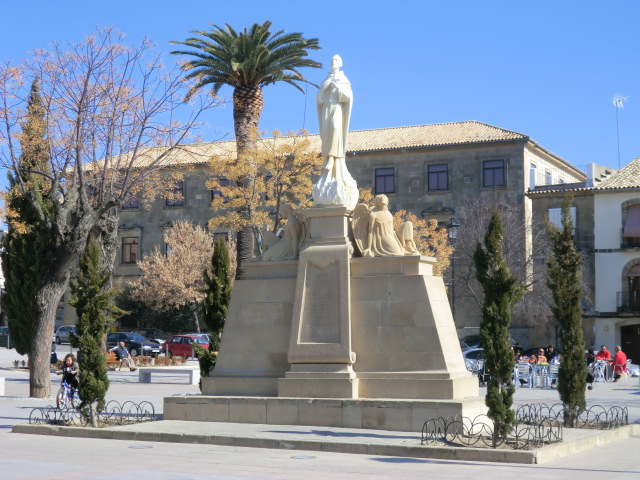
On May 3, 1232, in a fortress controlled by the Almohad ruler Abu Zeyt, a priest named Ginés Pérez Chirinos prepared to celebrate Mass. The Muslim king, curious about the Christian rite, had summoned the captive clergyman to demonstrate the sacred liturgy. But as Father Chirinos approached the altar, he discovered a crucifix was missing—without it, the Mass could not proceed. At that moment, according to tradition, the chamber filled with brilliant light, and two angels descended bearing a double-armed patriarchal cross containing a fragment of the True Cross from Jerusalem. The miraculous apparition led Abu Zeyt himself to embrace Christianity, and the relic remained in Caravaca. The city became a pilgrimage destination in the 13th century, and pilgrims still come today. Perched on a hilltop in the Noroeste Murciano of southeastern Spain, the city rises above the valley of the River Argos, its medieval silhouette dominated by the fortress-sanctuary that houses the precious relic. In 1998, Pope John Paul II recognized Caravaca's significance by granting it the privilege of celebrating a Perpetual Jubilee Year every seven years—making it one of only five Holy Cities in the world alongside Rome, Jerusalem, Santiago de Compostela, and Santo Toribio de Liébana. Pope Benedict XVI further elevated the sanctuary to a Minor Basilica in 2008. Today, the Basílica-Santuario de la Vera Cruz draws hundreds of thousands of visitors annually. The Cross of Caravaca—a distinctive patriarchal cross with two horizontal bars, often depicted flanked by the angels of its legendary arrival—has become a powerful symbol of faith far beyond Spain. Franciscan and Jesuit missionaries carried copies to the Americas, where the cross remains deeply venerated from California to Tierra del Fuego. Pilgrims ascending the cobblestone streets toward the sanctuary encounter a city where faith and history intertwine at every corner.
📜 History & Spiritual Significance
The presence of the Lignum Crucis in Caravaca dates to 1232, though its origins trace to Jerusalem and the reliquary of Patriarch Robert, first Latin Bishop of Jerusalem following the First Crusade. The double-armed cross—a patriarchal form that distinguishes it from ordinary crucifixes—arrived during the final decades before the Christian Reconquista reached this frontier territory. The Order of the Temple guarded both the fortress and the sacred relic from 1266 until their dissolution, after which the Knights of Santiago assumed custody in 1344. Under their protection, the cult of the Vera Cruz flourished. As early as 1363, pilgrims were leaving bequests to support the shrine, and in 1384, the ritual known as the Baño de la Cruz (Bath of the Cross) began—a tradition credited with ending a devastating plague. Pope Clement VII issued the first papal bull granting indulgences to pilgrims in 1392, followed by successive pontiffs who affirmed the relic's authenticity. The end of the frontier wars with Granada in 1492 opened Caravaca to unprecedented growth. Religious orders gravitated toward the miraculous cross: the Poor Clares arrived in 1609, and construction of the grand sanctuary began in 1617. The sacred relic, until then housed in a modest chapel within the fortress tower, was transferred to the new church in 1703. Master Lorenzo Suárez de Figueroa of the Order of Santiago made a pilgrimage in 1390, and his donations reflected the spreading devotion among Spanish nobility. In 1794, the Church granted the Caravaca Cross the Cultus Latria—the same form of worship accorded to the Blessed Sacrament—a rare distinction affirming its status as a true relic of Christ's Passion. The magnificent baroque facade, crafted from local red, black, and white marble between 1730 and 1750, proclaimed the sanctuary's importance to all who approached. Throughout the centuries, the faithful have continued to seek the cross's intercession, and the tradition of the Baño de la Cruz endures, drawing enormous crowds each May 3.
☩ Pilgrimage Sites in Caravaca de la Cruz
The pilgrimage landscape of Caravaca unfolds across a compact historic center rising from the valley floor to the fortress-crowned hilltop. The medieval street plan channels visitors upward through lanes of noble houses and Renaissance churches toward the sanctuary above.
Real Basílica-Santuario de la Santísima y Vera Cruz
The sanctuary rises within the walls of the medieval fortress, its 14 towers of varying shapes and sizes creating a dramatic silhouette against the Murcian sky. Construction began in 1617 under the Order of Santiago and reached completion in 1703, though the magnificent baroque facade of polychrome marble was added between 1730 and 1750. The church follows a Latin cross plan with a dome over the transept and galleries above the lateral naves. Within the sanctuary, the Caravaca Cross is displayed in the Capilla del Conjuratorio at the highest point of the building—positioned to be closer to the heavens when blessings are pronounced over the fields. The original 16th-century altarpiece by Hernando de Llanos, a disciple of Leonardo da Vinci, now resides in the adjacent Museo de la Vera Cruz, alongside treasures of sacred goldsmithing spanning five centuries. During Jubilee Years, the faithful may venerate the relic directly, kissing the True Cross at the conclusion of Mass.
El Templete
The elegant hexagonal pavilion inscribed within a circle marks the site where the annual Baño de la Cruz ritual has taken place since 1384. Each May 3, the Cross of Caravaca is immersed in water contained within this baroque structure, and the blessed water is distributed to the faithful—a tradition credited with miraculous healings since the medieval plague it was believed to have ended. The templete's graceful proportions and symbolic geometry make it one of Caravaca's most distinctive monuments.
Iglesia Parroquial de El Salvador
Church of the Savior
Constructed between 1534 and 1600, the Church of El Salvador stands as the finest example of Renaissance architecture in the Region of Murcia. Four massive Ionic columns, each nearly two meters in diameter, support the soaring ribbed vaults that reach a remarkable height despite the church remaining technically unfinished—only half of the original plan was ever completed. Seven side chapels funded by noble families contain works of sacred art including ironwork by master craftsman Ginés García and sculptures attributed to the school of Francisco Salzillo. The main entrance takes the form of a triumphal arch, and the exterior is adorned with scallop shells, crosses of Caravaca and Santiago, and the coats of arms of the Order of Santiago. Declared a National Historic-Artistic Monument in 1983, the church also houses a relic of Saint John Paul II.
Convento de las Carmelitas Descalzas
Founded on March 1, 1587, by order of Saint John of the Cross himself, then Provincial Vicar of Andalusia, this Discalced Carmelite convent represents a direct connection to one of the Church's greatest mystics. According to witnesses, the saint was present when the Blessed Sacrament was placed in the provisional chapel, though he did not live to see the current church completed. The rococo-style convent church continues to serve an enclosed community of contemplative sisters.
Museo de la Vera Cruz
Housed within the former residence of the sanctuary chaplains, the museum presents the history of the sacred relic through collections of paintings, goldsmithing, and documents spanning from the medieval period to the present. The highlight is the original Renaissance altarpiece commissioned by Pedro Fajardo, Marqués de los Vélez, in 1521 from Hernando de Llanos depicting the Apparition of the Cross.
🕯️ Annual Feast Days & Celebrations
Feast of the Santísima y Vera Cruz — May 3
Real Basílica-Santuario de la Vera Cruz. The spiritual heart of Caravaca's annual celebrations, this day centers on the ancient Baño de la Cruz ritual at El Templete. The Cross is processed through the streets to the baroque pavilion, where it is immersed in water while thousands of the faithful gather to receive the blessed water, believed to possess healing properties since 1384.
5 – Fiestas de la Santísima y Vera Cruz — May 1
(International Tourist Interest) Basílica-Santuario de la Vera Cruz and throughout the city. Five days of celebration combine solemn religious observance with spectacular popular traditions. The Caballos del Vino (Wine Horses) race up the steep hill to the sanctuary on May 2, their riders dressed in elaborate embroidered capes. Moors and Christians processions reenact the medieval conflicts and the legendary conversion that brought the Cross to Caravaca.
🛏️ Where to Stay
Hotel La Vera Cruz (boutique hotel) — Set within a restored noble house in the historic center, this highly-rated boutique hotel offers modern comfort behind traditional walls just minutes from both El Salvador church and the sanctuary above. The rooftop terrace provides views across the old town, and owners Ana and Alfonso are known for their warm hospitality and excellent local recommendations. Website ∙ Reserve this hotel
Círculo Artístico 1911 Hotel Boutique (boutique hotel) — Occupying a historic building at the most emblematic corner of the old town, this boutique hotel combines period character with contemporary amenities. The central location places guests steps from the main plaza and the beginning of the ascent to the sanctuary. Website
Hotel Almunia ⭐⭐⭐ — Located in the medieval heart of Caravaca, just a short walk from the central Plaza del Arco, this hotel offers spacious rooms with flat-screen televisions and serves as a comfortable base for exploring both the historic center and the surrounding countryside. The regional tourism office lists it with advantages for pilgrims on the Camino de la Cruz. Website ∙ Reserve this hotel
More hotels in Caravaca de la Cruz on Booking.com →
Accommodation available to book near Caravaca de la Cruz. Pilgrim houses and religious guesthouses are listed above — many take bookings directly and do not appear on booking sites.
🚗 Getting There
By Air: The nearest airport is Region de Murcia International Airport (RMU) at Corvera, approximately 92 kilometers (57 miles) southeast. Alicante-Elche Airport (ALC) lies roughly 100 kilometers to the northeast and offers more international connections. From either airport, rental car or bus connections via Murcia city are available.
By Bus: Interbus Murcia operates services from Murcia's Estación de Autobuses, with connections via Moratalla. The journey takes approximately 2 hours 55 minutes with transfers. Direct buses are limited, so checking current schedules at the Murcia bus station is advisable.
By Car: From Murcia, follow the A-30 motorway northwest toward Caravaca (approximately 77 km / 48 miles, about 50 minutes). From Alicante, take the A-7 south to Murcia, then the A-30 northwest. Free parking is available at the base of the old town, from where visitors ascend on foot through the historic streets.
Camino de la Vera Cruz: Pilgrims walking the Camino de Levante route arrive from Orihuela via approximately 120 kilometers of waymarked paths through the Murcian countryside. The route passes through Murcia, Mula, Bullas, and Cehegín before the final ascent to Caravaca. Completion of the pilgrimage route (minimum 50 km) entitles walkers to receive the Caravacensis credential.
📚 Further Reading
Books:
To be updated with verified resources.
Articles & Online Resources:
The Cross of Caravaca — Official tourism portal with history of the sacred relic.
A Place of Pilgrimage — Regional tourism guide to Caravaca as pilgrimage destination.
🎥 Recommended Videos
To be updated with verified resources. Please provide any specific YouTube videos you would like included.
🔗 Useful Links
Official Sanctuary Website – Information on visiting the Basílica-Santuario de la Vera Cruz.
Caravaca Tourism – Official tourism portal for Caravaca de la Cruz.
Murcia Region Tourism – Regional tourism information including monuments and accommodation.
Camino de la Cruz – Official pilgrimage route information and planning resources.
🧭 Nearby Pilgrimage Destinations
Santo Toribio de Liébana (Cantabria, ~700 km north) – Another of the five Holy Cities, housing the largest known fragment of the True Cross in the Monastery of Santo Toribio.
Murcia (~77 km southeast) – The regional capital contains the Cathedral of Santa María and the Sanctuary of the Virgen de la Fuensanta, patroness of Murcia.
Lorca (~70 km south) – The Castle of Lorca and numerous historic churches bear witness to centuries of faith on the frontier between Christian and Muslim Spain.
🪶 Closing Reflection
"The Church proposes to the faithful for their imitation, veneration and invocation, men and women who are outstanding in the splendor of charity and other evangelical virtues."
— Pope St. John Paul II, Divinus Perfectionis Magister, January 25, 1983