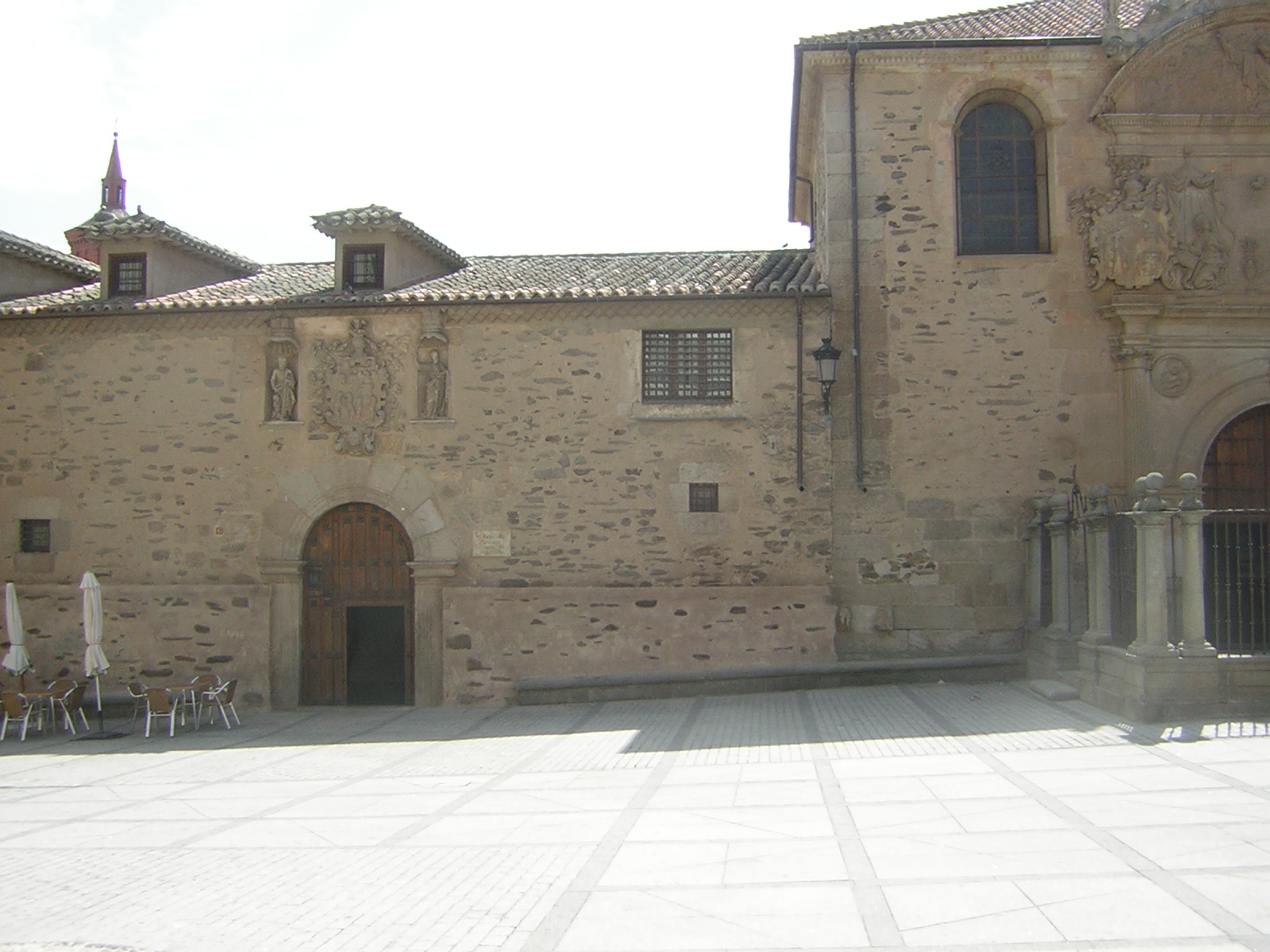
On August 15, 1568, St Teresa of Ávila established her fourth Discalced Carmelite convent in a converted house along the banks of the River Pisuerga. Present for the foundation was a young friar named Juan de Santo Matía, who here took the reformed Carmelite habit and adopted the name by which he would become known to history: John of the Cross. That moment in Valladolid set in motion one of the most significant partnerships in Catholic spiritual history—two Doctors of the Church, reformers who together would reshape the Carmelite Order and leave an enduring legacy of mystical theology.
Valladolid's Catholic heritage runs far deeper than this single moment. For a brief period in the sixteenth century, this city on the Castilian meseta served as capital of the Spanish Empire, drawing the court of Philip II and concentrating artistic patronage that produced some of Spain's finest religious sculpture. The city's churches became showplaces for polychrome wooden statuary—vivid, emotionally charged depictions of Christ's Passion and the lives of the saints. Today these masterworks, many by sculptors Alonso Berruguete, Juan de Juni, and Gregorio Fernández, fill the National Sculpture Museum and emerge each Holy Week in solemn processions that draw pilgrims from across Spain and beyond. Valladolid's Semana Santa, declared of International Tourist Interest, transforms the city into an open-air museum where centuries-old sculptures are carried through candlelit streets in one of Christendom's most moving commemorations of the Passion.
For English-speaking pilgrims, Valladolid holds particular significance. The Royal English College of St Alban, founded in 1589 with the blessing of Philip II, trained Catholic priests to serve the persecuted faithful in Elizabethan and Stuart England. Six of its alumni became saints, sixteen are numbered among the beatified martyrs, and the college serves as a propaedeutic seminary for England and Wales. In its chapel rests the Virgen Vulnerata—a statue mutilated by English raiders in Cádiz in 1596 and brought to Valladolid as an act of reparation, venerated each Holy Week in a procession unique to this historic institution.
📜 History & Spiritual Significance
Valladolid's ecclesiastical importance grew alongside its political prominence. Count Pedro Ansúrez founded the city's earliest parish churches in the eleventh century, including Santa María La Antigua, whose slender Romanesque tower is the oldest standing structure in the city. By the fifteenth century, Valladolid had become a center of Dominican learning, with the magnificent Colegio de San Gregorio (1496) training theologians, mystics, and inquisitors. Within its walls, the famous Controversia de Valladolid (1550–1551) debated the rights of indigenous peoples in the Americas—a landmark moment in the development of international law and Catholic social teaching.
The sixteenth century brought Valladolid to its zenith. Philip II was born here in 1527, and for a time the city served as the effective capital of an empire spanning four continents. This royal patronage attracted Spain's greatest sculptors, who created the emotionally powerful religious imagery that would define Castilian sacred art. Juan de Juni, a French sculptor who settled in Valladolid, carved works of such dramatic intensity that they seemed to breathe with spiritual life. Gregorio Fernández, working a generation later, perfected the technique of polychrome wood sculpture, creating Christ figures of such lifelike suffering that viewers wept before them.
The English Catholic mission to Valladolid began in 1589, when Jesuit priest Robert Persons secured Philip II's permission to establish a seminary for English priests. Elizabeth I had declared such seminarians traitors by mere fact of their ordination, condemning them to death if caught on English soil. Yet young men continued to come, knowing full well the fate that awaited them. Henry Walpole, one of the college's founders, returned to England in 1593 and was arrested almost immediately. Tortured in the Tower of London and tried at York, he refused to renounce his faith and became the college's first martyr on April 7, 1595.
The arrival of the Virgen Vulnerata in 1600 gave the English College its most treasured devotion. During the English raid on Cádiz in 1596, soldiers had desecrated churches and mutilated a statue of Our Lady of the Rosary, hacking off her limbs and those of the Christ Child she held. When the priests and seminarians of Valladolid heard of this outrage, they requested the damaged statue as an act of reparation for their countrymen's sacrilege. A Spanish countess who had rescued the image agreed, and on September 8, 1600—the feast of the Nativity of Our Lady—the Vulnerata was carried into Valladolid with great solemnity and installed in the college chapel.
St Teresa's foundation in Valladolid, meanwhile, flourished despite early difficulties. The original site proved unhealthy, causing illness among the nuns, but the generous patronage of María de Mendoza provided a permanent home where the Discalced Carmelites live a contemplative life. The convent preserves memories of both Teresa and John of the Cross, who served as the nuns' confessor during the foundation period.
☩ Pilgrimage Sites in Valladolid
Valladolid's historic center concentrates remarkable sacred heritage within easy walking distance. The monumental Plaza de San Pablo, flanked by the ornate facade of the Dominican church and the entrance to the National Sculpture Museum, forms the natural starting point for pilgrim exploration. From here, the cathedral rises just minutes away, with the ancient tower of Santa María La Antigua visible beyond.
Cathedral of Our Lady of the Assumption
Catedral de Nuestra Señora de la Asunción
Juan de Herrera, architect of El Escorial, designed Valladolid's cathedral with the ambition of creating the largest church in Europe. Construction began in 1582 under Philip II's patronage, but financial constraints following the court's move to Madrid in 1606 left only forty percent of the plan completed. What stands today impresses with its severe Herrerian grandeur—clean lines and monumental proportions that influenced Spanish ecclesiastical architecture for generations. The main altarpiece by Juan de Juni, transferred from Santa María La Antigua in 1922, depicts scenes from the life of the Virgin with characteristic emotional intensity.
The cathedral serves as the mother church of the Archdiocese of Valladolid and the spiritual anchor of the city's Holy Week celebrations. The Diocesan Museum houses a magnificent processional monstrance by Juan de Arfe and sacred art spanning five centuries. Guided tours ascend the bell tower for panoramic views across the Castilian plain, offering pilgrims a contemplative perspective on the city where Teresa and John of the Cross began their historic partnership.
Church of Santa María La Antigua
Iglesia de Santa María La Antigua
The oldest church in Valladolid and beloved symbol of the city, Santa María La Antigua preserves its slender twelfth-century Romanesque tower crowned with a distinctive pyramidal spire covered in ceramic tiles—the tallest Romanesque bell tower surviving in the Iberian Peninsula. Count Pedro Ansúrez is traditionally credited with the foundation around 1095, though the current Gothic nave dates from the fourteenth century. Archaeological excavations beneath the church have revealed Roman baths, medieval burials, and traces of the city's earliest Christian settlement.
The tower's silhouette appears on countless representations of the city, and the church is a place of daily prayer and devotion. Until 1922, the church housed Juan de Juni's magnificent altarpiece depicting the life of the Virgin—now in the cathedral but spiritually connected to its original home.
Church of San Pablo
Iglesia Conventual de San Pablo
The Dominican church of San Pablo presents one of northern Spain's most extraordinary facades—a riot of Isabelline Gothic ornament commissioned by Cardinal Juan de Torquemada in the fifteenth century and later enriched by the Duke of Lerma. Every surface blooms with carved vegetation, heraldic devices, and religious figures in stone lacework of astonishing intricacy. The adjacent Colegio de San Gregorio (1496), with its equally elaborate portal showing wild men supporting a tree of life, now houses the National Sculpture Museum.
The interior contains sculptures by Gregorio Fernández, including powerful images of St Dominic and Christ that process through Valladolid's streets during Holy Week. The church witnessed the baptisms of Philip II (1527) and Philip IV (1605), linking it intimately to Spain's Catholic monarchy. Dominican spirituality animates this space, where theologians once debated the rights of indigenous peoples in the famous Controversia de Valladolid.
National Sculpture Museum
Museo Nacional de Escultura
Spain's premier museum of polychrome wood sculpture occupies the magnificent Colegio de San Gregorio (1496), itself a masterpiece of Isabelline Gothic architecture. The collection spans the thirteenth through nineteenth centuries, with particular strength in Castilian Baroque religious imagery. The building's ornate facade and two-story cloister rank among the finest examples of late Gothic decoration in Spain.
Major works include Alonso Berruguete's monumental retablo from San Benito el Real, Juan de Juni's Entierro de Cristo (Entombment of Christ), and multiple masterpieces by Gregorio Fernández including his haunting Cristo Yacente (Recumbent Christ). Several processional pasos emerge from the museum each Holy Week to fulfill their original devotional purpose on the streets of Valladolid—sacred art returning to active worship after centuries.
Royal English College of St Alban
Real Colegio de Ingleses de San Albano
The oldest English seminary on the European continent, the college trains priests for England and Wales. Jesuit priest Robert Persons founded it in 1589 with Philip II's support, creating a refuge where young Englishmen could train for ordination despite Elizabeth I's declaration that such seminarians were traitors condemned to death. Henry Walpole, among the founders, returned to England in 1593 and became the college's first martyr on April 7, 1595.
Six alumni became saints and sixteen are numbered among the beatified martyrs of England and Wales. The octagonal chapel houses the Virgen Vulnerata—a statue of Our Lady mutilated by English raiders in Cádiz in 1596 and brought here on September 8, 1600, as an act of reparation for countrymen's sacrilege. Each Holy Week, the Vulnerata processes through the streets to meet the paso of the Crucified Christ in a ceremony unique to Valladolid. The college welcomes visitors by prior arrangement.
Convent of St Teresa of Jesus
Convento de Santa Teresa de Jesús
St Teresa established her fourth Discalced Carmelite foundation here on August 15, 1568. The original site along the River Pisuerga proved unhealthy, causing illness among the nuns, but the generous patronage of María de Mendoza secured a permanent home where the community relocated on February 3, 1569. The brick church, simple in keeping with Teresian principles, was constructed in the seventeenth century.
This convent preserves relics and memories of the foundress and of St John of the Cross, who here took the Discalced Carmelite habit and served as confessor to the community during the foundation period. That encounter between the two great Doctors of the Church set in motion one of history's most significant spiritual partnerships. The Discalced Carmelites keep a contemplative life in the convent; the community maintains strict enclosure, but the church is open for prayer and Mass.
Church of San Miguel y San Julián
Iglesia de San Miguel y San Julián
Built by the Jesuits in the late sixteenth century, this church exemplifies the confident architecture of the Counter-Reformation. The austere exterior conceals an interior of baroque splendor with three magnificent altarpieces. The Society of Jesus established their presence here during Valladolid's years as Spain's effective capital, making this church a center of the Catholic reform movement.
Most remarkable is the relicario or reliquary room, containing over 400 relics of saints in elaborate displays—one of the largest such collections in Spain. The church's sacred art includes important sculptures and paintings from the sixteenth and seventeenth centuries, testimony to Valladolid's role as a center of Counter-Reformation spirituality and devotion to the communion of saints.
Basilica-Sanctuary of the Great Promise
Basílica-Santuario de la Gran Promesa
Built in the early seventeenth century as the church of the Jesuit Colegio de San Ambrosio, this basilica—dedicated to the Sacred Heart of Jesus—passed to the parish of San Esteban after the 1767 expulsion of the Jesuits from Spain. Here, on Ascension Day, May 14, 1733, the Jesuit Blessed Bernardo Francisco de Hoyos received the vision that gave the church its name: "Reinaré en España, y con más veneración que en otras partes"—"I shall reign in Spain, and with more veneration than in other places." A second confirming experience followed on September 25 of that year, and the words are inscribed around the sanctuary's vault.
The church was declared National Sanctuary of the Sacred Heart of Jesus on June 15, 1941, and Pope Paul VI raised it to Minor Basilica on May 12, 1964; Hoyos himself was beatified in this city on April 18, 2010. A short walk southeast of the cathedral, on Plaza de España, the basilica also serves as a center of spirituality for the archdiocese.
🕯️ Annual Feast Days & Celebrations
Holy Week (Semana Santa) — Palm Sunday through Easter Sunday
Valladolid Cathedral and citywide processions. Declared of International Tourist Interest, Valladolid's Holy Week is renowned for its solemn, silent processions bearing masterworks of Castilian religious sculpture. Twenty brotherhoods carry 61 pasos through the historic streets, culminating in the General Procession of Good Friday afternoon when 31 sculptural groups traverse the city in candlelit devotion. The Sermón de las Siete Palabras (Sermon of the Seven Words), preached in the Plaza Mayor, recalls the autos-da-fé of the sixteenth century.
Feast of the Nativity of Our Lady — September 8
Real Colegio de Ingleses. The anniversary of the Virgen Vulnerata's arrival in Valladolid is celebrated with special solemnity at the English College, commemorating the day in 1600 when the mutilated statue was installed in the college chapel as an act of reparation.
🛏️ Where to Stay
Hotel Mozart ⭐⭐⭐ — Occupying an elegant eighteenth-century building in the heart of the historic center, the Hotel Mozart stands five minutes' walk from the cathedral and near Casa de Cervantes. The bar-cafeteria serves tapas and wines from the surrounding Ribera del Duero, Rueda, and Cigales regions. Website ∙ Reserve this hotel
Dorma El Coloquio ⭐⭐⭐⭐ — Boutique hotel near Santa María La Antigua with terrace views toward the cathedral. Stylishly renovated with modern amenities including air conditioning and minibar, within easy walking distance of all major pilgrimage sites. Website ∙ Reserve this hotel
Nexus Valladolid Suites & Hotel ⭐⭐⭐⭐ — Modern suites with views over Valladolid's old town, three minutes' walk from the cathedral and Calderón Theater. Striking contemporary design in a historic setting, with kitchenettes in all suites. Website ∙ Reserve this hotel
Hotel Colón Plaza ⭐⭐⭐⭐ — Elegant nineteenth-century building opposite Campo Grande park, two minutes' walk from the high-speed train station. The Plaza Mayor and cathedral lie a short walk away. Website ∙ Reserve this hotel
More hotels in Valladolid on Booking.com →
Accommodation available to book near Valladolid. Pilgrim houses and religious guesthouses are listed above — many take bookings directly and do not appear on booking sites.
🚗 Getting There
By Air: Valladolid Airport (VLL) lies 10 km northwest of the city center, with connections to Barcelona, Palma de Mallorca, and seasonal European destinations. Madrid-Barajas Airport (MAD), approximately 180 km south, offers far more extensive international connections; high-speed trains link Madrid to Valladolid in under one hour.
By Train: Valladolid-Campo Grande station serves as a major hub on Spain's high-speed rail network. AVE trains connect to Madrid (55 minutes), Segovia (30 minutes), and Barcelona (4 hours 30 minutes). Conventional services reach León, Burgos, Salamanca, and other Castilian cities. The station sits at the southern edge of Campo Grande park, a pleasant 15-minute walk from the cathedral through the park's gardens.
By Bus: The Estación de Autobuses on Calle Puente Colgante connects Valladolid with cities throughout Spain. ALSA operates services to Madrid (2 hours 30 minutes), León, Salamanca, and Burgos. The station is approximately one kilometer east of the historic center.
By Car: Valladolid sits at the junction of the A-62 (from Burgos and the Basque Country) and A-601/A-11 (from Segovia and Soria). The A-601 continues south toward Madrid, while the A-6 autovía provides the fastest route to the capital (approximately 2 hours). Parking in the historic center is limited; the Plaza Mayor and Paseo Zorrilla areas have public garages.
Local Transport: The compact historic center is easily explored on foot. AUVASA buses connect outlying areas and the train station to the center. Taxis are readily available.
📚 Further Reading
Books:
Michael E. Williams, St Alban's College Valladolid: Four Centuries of English Catholic Presence in Spain — Comprehensive history of the English College from foundation to modern times.
Ilenia Colón Mendoza, The Cristos Yacentes of Gregorio Fernández: Polychrome Sculptures of the Supine Christ in Seventeenth-Century Spain — Academic study of Fernández's Recumbent Christ tradition, the sculptural type displayed in the National Sculpture Museum and carried in Holy Week processions.
Articles & Online Resources:
Royal English College History — Official account of the college's founding, martyrs, and continuing mission.
Holy Week in Valladolid — Official tourism guide to Semana Santa processions and traditions.
📿 Devotional Items
The cathedral is the Catedral de Nuestra Señora de la Asunción — Our Lady of the Assumption.
Assumption of the Virgin with Angels, Statue 20.5 inch (Vittoria Collection) — Italian sculpture of the Virgin borne up by angels, made in Italy.
Our Lady of the Assumption Medal, .925 Sterling Silver — On a 24-inch rhodium-plated chain, boxed.
Our Lady of the Assumption Pendant, Sterling Silver — On an 18-inch sterling curb chain.
🎥 Recommended Videos
The Royal & Pontifical English College Valladolid — Tour of the seminary and its chapel, home to the Virgen Vulnerata. Cardiff Vocations, 13 min.
City of Unnumbered Monuments: Valladolid — English-language walking tour with chapters covering the cathedral, Santa María La Antigua, and San Pablo. Come To Spain, 14 min.
🔗 Useful Links
Valladolid Tourism – Official city tourism portal with comprehensive visitor information.
Archdiocese of Valladolid – Official website of the archdiocese.
National Sculpture Museum – Collection highlights, visiting hours, and exhibition information.
Castile and León Tourism – Regional tourism with pilgrimage and cultural heritage routes.
🧭 Nearby Pilgrimage Destinations
Medina del Campo (45 km south) – Site of St Teresa's second Discalced Carmelite foundation (1567) and one of Spain's finest castles, the Castillo de la Mota. Holy Week declared of International Tourist Interest.
Tordesillas (30 km southwest) – Historic town where the Treaty of Tordesillas (1494) divided the New World between Spain and Portugal. The Real Monasterio de Santa Clara preserves exceptional Mudéjar architecture.
Simancas (11 km southwest) – The General Archive of Simancas, housed in a medieval castle, contains millions of documents from the Spanish Empire. The parish church of El Salvador dates from the sixteenth century.
Palencia (47 km north) – Cathedral known as La Bella Desconocida (The Beautiful Unknown) for its underappreciated Gothic splendor. Holy Week declared of International Tourist Interest.
🪶 Closing Reflection
"Let nothing disturb you, let nothing frighten you. All things are passing away: God never changes. Patience obtains all things. Whoever has God lacks nothing; God alone suffices."