On February 5, 1597, twenty-six men — Japanese converts and foreign Franciscan and Jesuit missionaries — were marched some 600 miles through winter from Kyoto to Nishizaka Hill, a slope above Nagasaki harbour, and crucified there as a warning against the Christian faith. From the crosses they sang psalms and preached to the crowd gathered below.
Nagasaki is a deep-water port folded into steep hills at the western edge of Japan — the harbour Portuguese ships entered in the sixteenth century, and the one door left ajar through two and a half centuries of national isolation. The executions did not end what the ships had brought. In the fishing villages and terraced valleys around the city, the faith went underground: for twelve generations the Hidden Christians baptized their children in secret, disguised holy medals as Buddhist amulets, and passed down prayers by memory alone. In 1865 they made themselves known, whispering to a French priest outside a new church at Oura. Eighty years later, on August 9, 1945, the atomic bomb exploded directly over Urakami, the neighbourhood where their descendants had built the largest church in Asia; 8,500 of the parish's 12,000 Catholics died within sight of their cathedral.
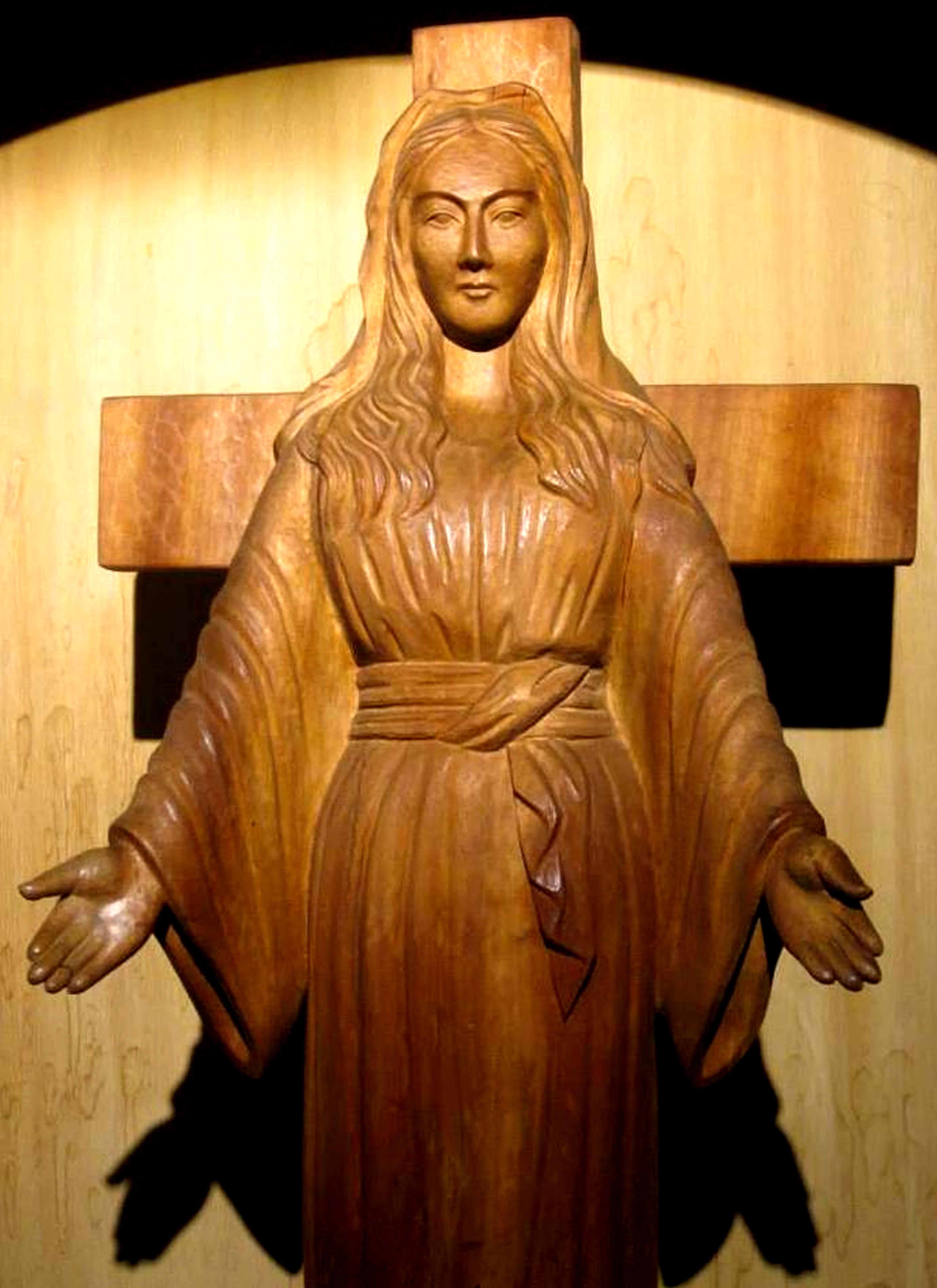
What that history left behind, the city keeps in things a pilgrim can stand before: the bronze relief of the twenty-six martyrs on Nishizaka Hill; Oura Cathedral, with a plaque at the spot where the whispered confession was made; and at Urakami, rebuilt over the ground where the parish died, the charred wooden face of the "Bombed Mary" and the Angelus bell the blast melted. In 2018 UNESCO inscribed the region's Hidden Christian sites on the World Heritage list.
📜 History & Spiritual Significance
Christianity arrived in Nagasaki in 1569, brought by Portuguese Jesuit missionaries who found fertile ground in a region where feudal lords welcomed trade with European powers. By 1579 the Society of Jesus had established a seminary, and within a decade the city's population was majority Christian. The Catholic community grew until Toyotomi Hideyoshi, unifying warlord of Japan, issued his first anti-Christian edict in 1587.
The persecution escalated after October 19, 1596, when the Spanish galleon San Felipe ran aground at Urado in Shikoku. According to Japanese accounts, the ship's pilot boasted that Spanish missionaries softened foreign lands for military conquest — a claim that alarmed Hideyoshi. On February 5, 1597, six Franciscan missionaries (four Spanish, one Mexican, one Indian), three Japanese Jesuits, and seventeen Japanese laymen — among them three boys aged 12 to 15 — were crucified on Nishizaka Hill. St. Paul Miki, a Japanese Jesuit brother, preached from his cross: "The only reason for my being killed is that I have taught the doctrine of Christ. I thank God it is for this reason that I die."
The 26 martyrs were beatified by Pope Urban VIII in 1627 and canonized by Pope Pius IX on June 8, 1862 — the first martyrs of Japan to be formally recognized by the Church. They were not the last. When Tokugawa Ieyasu consolidated power and banned Christianity empire-wide in 1614, Nagasaki became the epicenter of the persecution. Between 1614 and 1644, over 200 Christians were martyred in Nagasaki alone, many bound to crosses on the tidal flats to drown as the sea rose.
By 1639 Japan had expelled all Europeans and entered sakoku — national isolation. Catholic practice was punishable by death. In fishing villages and mountain communities around Nagasaki, Christians went underground. For 250 years the Kakure Kirishitan (Hidden Christians) preserved their faith without priests, sacraments, or written texts, passing down prayers that evolved into hybrids of Latin, Japanese, and Buddhist terminology. Children were baptized in secret. Holy medals were disguised as Buddhist amulets. The Virgin Mary was venerated in the form of Maria Kannon, a statue outwardly of the Buddhist goddess of mercy.
The isolation ended in 1854, when Commodore Perry's American fleet forced Japan to open to trade. In 1864, French missionaries completed Oura Cathedral in Nagasaki's foreign settlement, dedicated to the 26 martyrs. On March 17, 1865, a group of peasants from Urakami village approached Fr. Bernard Petitjean outside the cathedral. A woman whispered: "We have the same heart as you. Where is the statue of Santa Maria?" This "Discovery of the Hidden Christians" revealed that an estimated 30,000 Catholics had survived in secret.
The discovery sparked renewed persecution. Between 1867 and 1873 the Meiji government arrested and exiled over 3,000 Urakami Christians to remote provinces, where 662 died of exposure and starvation. International pressure from Western powers ended the suppression. Religious freedom was granted in 1889, though Catholics remained marginalized.
In 1925 Urakami Cathedral was completed after 30 years of construction — the largest Christian structure in Asia at the time, built by the donations of parishioners in a working-class neighbourhood. Twenty years later, at 11:02 a.m. on August 9, 1945, the atomic bomb exploded 500 meters from the cathedral. The brick structure collapsed instantly. Of 12,000 Catholics in Urakami parish, 8,500 died that day — including two priests hearing confessions inside the cathedral. Part of the bell tower survived; the Angelus bell itself was melted and fused by the heat.
Dr. Takashi Nagai, a Catholic radiologist who lived through the destruction, wrote that Urakami's Catholics died as a hansai — a burnt offering for the sins of the war and for peace. Dying of radiation sickness, he spent his last years writing from a two-tatami hut beside the ruins. The cathedral was rebuilt between 1959 and 1980, incorporating stones from the original into the new structure. Fragments of the 1925 building and the melted Angelus bell are kept on the grounds.
Pope Francis visited Nagasaki on November 24, 2019, praying at the 26 Martyrs Monument and delivering a condemnation of nuclear weapons at the hypocenter. He called Nagasaki's martyrs "a great cloud of witnesses."
☩ Pilgrimage Sites in Nagasaki
Twenty-Six Martyrs Museum and Monument
At the site where the twenty-six were crucified on February 5, 1597, a museum and monument stand on Nishizaka Hill, looking down on the harbour where the Portuguese ships once docked. The bronze monument, by sculptor Yasutake Funakoshi and unveiled in 1962 for the centennial of the canonization, depicts the 26 saints life-size on their crosses — St. Paul Miki at the center, his mouth open in preaching, the teenage martyrs Antonio and Louis near him.
The museum below preserves what remains of Japan's Catholic century: Hidden Christian devotional objects disguised as Buddhist items, fumie (bronze plaques of Christ that suspected Christians were forced to trample), seminary documents, and letters from missionaries. The collection includes the only surviving portrait of a member of the Tenshō Embassy — four young Japanese Christians who traveled to Rome in 1585, met Pope Gregory XIII, and returned to a country turning against their faith.
Oura Cathedral (Basilica of the Twenty-Six Holy Martyrs of Japan)
Completed in 1864 by French missionaries and dedicated to the 26 martyrs crucified on the hillside visible from its windows, Oura Cathedral is the oldest surviving Christian church in Japan and a National Treasure since 1933. Designed under Fr. Louis Furet and Fr. Bernard Petitjean, it was the first Western-style building erected in Japan after the isolation ended. Its stained glass is among the oldest in the country.
On March 17, 1865, a group of peasants from Urakami village approached Fr. Petitjean here. One woman, later identified as Yuri Sugimoto, whispered: "Where is the statue of Santa Maria? We have the same heart as you." A memorial plaque marks the spot where Petitjean stood when the confession was made — the moment the Church learned that the Hidden Christians existed.
Oura Cathedral was elevated to minor basilica status in 2016 and inscribed as a UNESCO World Heritage Site in 2018 as part of "Hidden Christian Sites in the Nagasaki Region." The interior, restored after wartime damage, preserves the original altar and the statue of the Virgin before which the Hidden Christians first prayed openly.
Urakami Cathedral (Cathedral of the Immaculate Conception)
Urakami Cathedral rises on the ground where 8,500 Catholics died in the atomic blast of August 9, 1945. The current building, completed in 1980, incorporates ruins of the 1925 original — once the largest church in Asia — which collapsed when the bomb exploded 500 meters away. The red brick facade includes salvaged stones scarred by the blast, and the original Angelus bell, melted and fused by the heat, rests in a memorial garden among fragments of the first building.
The Urakami valley was the heart of the Hidden Christian community. After the 1865 discovery, over 3,000 Urakami Catholics were arrested and exiled between 1867 and 1873; 662 died. The survivors returned and built the cathedral, completing it in 1925 after 30 years of working-class donations. It stood for 20 years.
Dr. Takashi Nagai, the Catholic radiologist who chronicled the bombing, wrote in The Bells of Nagasaki and Leaving My Beloved Children Behind of Urakami's dead as a burnt offering (hansai). The rebuilt cathedral enshrines the wooden statue of Mary whose face was charred in the blast — the "Bombed Mary of Urakami." The cathedral museum displays vestments of the priests who died hearing confessions on August 9 and photographs of the original building; on the grounds is Nyokodo ("As Yourself" Hermitage), the tiny hut where Nagai wrote his final works.
Nagasaki Peace Park
Adjacent to the atomic bomb hypocenter, the Peace Park memorializes the 73,884 counted dead of August 9, 1945 — roughly half of them killed in the blast itself, the rest over the months that followed, of burns and radiation sickness. The centerpiece is the 10-meter Peace Statue (1955) by sculptor Seibo Kitamura: a seated figure whose right hand points to the sky the bomb came from, the left extended in blessing. Donated monuments from nations around the world line the grounds, and markers show the hypocenter, where the temperature reached 3,000 to 4,000 degrees Celsius.
For Catholic pilgrims the park is inseparable from Urakami Cathedral, 500 meters north. The bomb exploded directly over the Catholic quarter, and Nagasaki's Catholics — less than 1% of the city's population — accounted for a starkly disproportionate share of the dead: 8,500 of the parish's 12,000.
🕯️ Annual Feast Days & Celebrations
Memorial of St. Paul Miki and Companions — February 6
The universal Church calendar commemorates St. Paul Miki and the Twenty-Six Martyrs of Japan on February 6. In Nagasaki, pilgrims gather at the 26 Martyrs Monument on Nishizaka Hill for outdoor Mass, followed by a procession to Oura Cathedral, where relics of the martyrs are venerated. The Archbishop of Nagasaki presides, and Catholics come from across Asia for the day, which includes catechesis on the Hidden Christians and prayers for religious freedom in Asia.
Atomic Bomb Memorial Mass — August 9
At 11:02 a.m. — the minute the bomb exploded — bells toll across Nagasaki and the city observes a minute of silence. Catholics gather at Urakami Cathedral for the memorial Mass, followed by a peace procession to the hypocenter monument in Peace Park. The Archbishop of Nagasaki delivers a peace message, a practice with roots in the writings of Dr. Takashi Nagai. Pope Francis's 2019 declaration at this site — that the use and possession of nuclear arms is "immoral" — is read. Pilgrims pray before the charred statue of Mary that came through the blast.
Discovery of the Hidden Christians — March 17
This local observance commemorates the 1865 encounter between Fr. Bernard Petitjean and the Hidden Christians of Urakami at Oura Cathedral. On March 17, Catholics process from the spot where the whispered confession was made to the altar where Petitjean celebrated Mass, with readings on the Church's indestructibility and prayers of thanksgiving for the 30,000 who kept the faith through 250 years without priests.
🛏️ Where to Stay
Hotel Concerto Nagasaki ⭐⭐⭐ — Business hotel in the Urakami district, about 700 meters from the Peace Park and a short walk from the Atomic Bomb Museum tram stop, with Western and Japanese-style rooms and a breakfast of local specialties. Website ∙ Reserve this hotel
Richmond Hotel Nagasaki Shianbashi ⭐⭐⭐⭐ — Hotel in the central Shianbashi district, one minute from the Shianbashi tram stop with direct lines toward Oura Cathedral, with 202 rooms, an on-site restaurant, and a 24-hour front desk. Reserve this hotel
Nagasaki Marriott Hotel ⭐⭐⭐⭐⭐ — Luxury hotel in the Nagasaki Station complex, a three-minute walk from the trains and trams, with 207 rooms overlooking the city, Mount Inasa, or the harbour, and Japanese and international restaurants. Website ∙ Reserve this hotel
Urakami Catholic Center (pilgrim accommodation) — Simple rooms operated by the Archdiocese of Nagasaki adjacent to Urakami Cathedral, with priority given to organized pilgrimage groups; advance reservation through the archdiocese is required. Website
More hotels in Nagasaki on Booking.com →
Accommodation available to book near Nagasaki. Pilgrim houses and religious guesthouses are listed above — many take bookings directly and do not appear on booking sites.
🚗 Getting There
By Air: Nagasaki Airport (NGS) lies 45 km from downtown, with international connections through Tokyo, Seoul, Shanghai, and Hong Kong, plus domestic flights from major Japanese cities. Airport limousine buses run every 20–30 minutes to Nagasaki Station (about 45 minutes).
By Train: Take the Shinkansen from Tokyo (about 6 hours) or Osaka (about 4 hours) to Hakata Station in Fukuoka, then transfer toward Nagasaki via the Nishi Kyushu Shinkansen connection (about 2 hours). JR Pass holders travel free on both legs. Nagasaki Station is central, with tram connections to all the pilgrimage sites.
By Bus: Highway buses run from Fukuoka (Tenjin and Hakata) to Nagasaki roughly every 30 minutes during the day (about 2.5 hours) — the most economical option for travelers without a JR Pass. Overnight buses run from Osaka and Kyoto.
By Car: From Fukuoka, take the Nagasaki Expressway west (about 2 hours). Parking near the pilgrimage sites is limited; most hotels offer parking for guests.
Local Transport: Nagasaki's vintage tram system is the most convenient way to move between the sites, running on color-coded routes with flat fares and a one-day pass. The stops nearest the pilgrimage sites are Oura Tenshudoshita (Oura Cathedral) and Matsuyama-machi (Urakami Cathedral and Peace Park); the 26 Martyrs Monument on Nishizaka Hill is close to Nagasaki Station.
On Foot: The major sites can be connected in a single day's walk of about 8 km: from Oura Cathedral to the 26 Martyrs Monument on Nishizaka Hill (about 2.5 km), then on to Urakami Cathedral and the Peace Park (about 4 km). Allow 4–5 hours with stops for prayer.
📚 Further Reading
Books:
Shusaku Endo. Silence — The novelist's masterwork on faith under persecution, following Portuguese Jesuits in 17th-century Japan. Winner of the Tanizaki Prize, adapted into a 2016 film by Martin Scorsese.
John Dougill. In Search of Japan's Hidden Christians — Travelogue and historical account of the sites across Kyushu where the Hidden Christians preserved their faith, with practical pilgrimage information for Nagasaki's World Heritage Sites.
Shusaku Endo. The Final Martyrs — Short stories on Japanese Catholic identity, from the Hidden Christians to the atomic bomb. Endo, himself a Catholic, writes with theological depth about suffering and grace.
Online Resources:
Catholic Archdiocese of Nagasaki — Official diocesan site with pilgrimage information and historical resources on the martyrs and Hidden Christians.
Vatican: Pope Francis at Nagasaki, 2019 — Full text of the Holy Father's address at the 26 Martyrs Monument.
UNESCO World Heritage: Hidden Christian Sites — Official inscription details for the 12 Hidden Christian sites in the Nagasaki and Amakusa regions.
🔗 Useful Links
Catholic Archdiocese of Nagasaki — Official diocesan website with pilgrimage resources and historical information on the martyrs and Hidden Christians.
DISCOVER NAGASAKI — Official tourism portal with practical information on transportation, accommodation, and routes.
Nagasaki Churches Information Center — Coordinating center for visits to the UNESCO World Heritage church sites across the region.
Oratio Pilgrimage Routes — Route information for the 468 km World Heritage Pilgrimage Route connecting the Nagasaki and Amakusa region sites.
🥾 Pilgrim Routes
World Heritage Pilgrimage Route of Nagasaki and Amakusa Region — A 468 km route in 35 sections connecting the UNESCO World Heritage Hidden Christian sites across Nagasaki and Kumamoto prefectures. The route links Oura Cathedral, the remote village churches built after 1873 when the Hidden Christians could worship openly, offshore islands where martyrs were executed, and the mountain communities that kept the faith through the persecution. Sections range from 5 to 25 km and can be walked individually or as a multi-week pilgrimage; maps, GPS tracks, and accommodation lists are published by the Oratio coordination service. Route information and maps
🧭 Nearby Pilgrimage Destinations
No major Catholic pilgrimage destination lies within 500 km of Nagasaki. The nearest with a guide is Akita (about 1,200 km north, on Honshu), where the statue of Our Lady of Akita wept 101 times between 1975 and 1981 in a Church-approved apparition. Reaching Akita requires a domestic flight via Tokyo or a full-day rail journey.
The Hidden Christian village churches inscribed by UNESCO — among them Kashiragashima Church, Egami Church in the Goto Islands, and Shitsu Church in the Sotome district — lie within Nagasaki prefecture itself, reached via the 468 km World Heritage Pilgrimage Route described above. These coastal and island churches, built after 1873 when the Hidden Christians could worship openly, form Japan's principal Catholic pilgrimage landscape beyond Nagasaki city.
Farther afield, Seoul, South Korea (a 2-hour flight) has its own martyrdom shrines, including Jeoldusan and Myeongdong Cathedral — Korean Catholic history, like Japan's, began with lay believers who kept the faith under persecution.
🪶 Closing Reflection
"This shrine does more than speak of death; it also speaks of the triumph of life over death. The songs and prayers of the martyrs resounded throughout these hills. In this place, they sang psalms, invoked the Holy Name of Jesus, Mary and Joseph, and recited the Our Father and the Hail Mary. The sound of their prayers and songs rose to heaven. What the powerful of their day wanted to stifle and silence was instead proclaimed and heard far and wide. Death sought to make them silent, yet their witness continues to speak, down to our own day. How many people, moved by the heroic example of their lives, have followed in their footsteps! How many have drawn and continue to draw from this great cloud of witnesses the strength to face trials and all forms of discrimination, persecution and incomprehension!"
— Pope Francis, Speech at Nishizaka Hill Martyrs' Monument, November 24, 2019