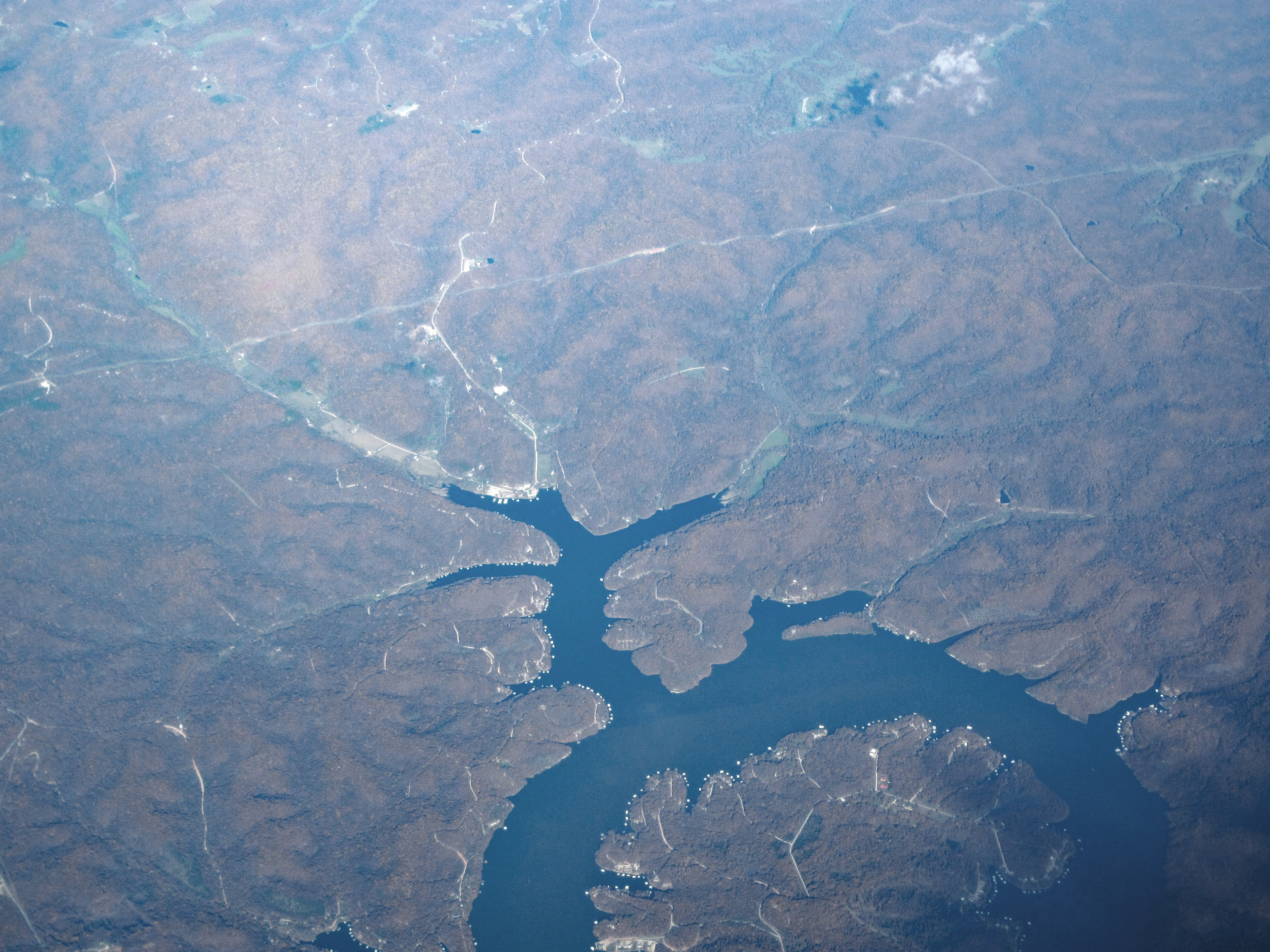
On the morning of December 8, 1873—the feast of the Immaculate Conception—two Swiss Benedictine priests stepped onto a ridge in the rolling hills of northwest Missouri and formally established the monastery they would call New Engelberg. Fathers Frowin Conrad and Meinrad Widmer had left their motherhouse of Engelberg Abbey in Switzerland that April, uncertain whether Europe's monasteries would survive the political upheavals of Bismarck's Kulturkampf. They had come to this remote corner of Missouri at the invitation of a local priest named James Power, who had been trying for years to secure a religious community for the Irish and German settlers he had gathered on the frontier. A handful of snow-covered farmsteads, a November wind off the plains—and the feast day that would forever define the community they were founding.
The monastery they planted on that ridge became one of the most significant Benedictine houses in North America. By 1881 it had been elevated to an independent abbey. By 1941, Pope Pius XII had recognized its church as a minor basilica—the first west of the Mississippi River. Today, approximately 59 monks live and pray there, still following the Regula Benedicti, still chanting the Divine Office in the same stone church their predecessors adorned with some of the rarest sacred murals on the continent.
What draws pilgrims to this remote Missouri hill is not simply the historical significance of the basilica, though that alone is considerable. It is the encounter with a living monastic community, the sound of Gregorian chant carried through Romanesque arches, the 24 painted walls glowing with figures that seem to belong equally to ancient Egypt and medieval Germany. Conception Abbey is a place where the Rule of Saint Benedict is not a relic but a daily practice, and where guests are welcomed—as the Rule commands—as Christ himself.
📜 History & Spiritual Significance
The land on which Conception Abbey stands had been prepared for it by an Irishman named James Power, who in 1858 had brought a colony of settlers to northwest Missouri, naming the settlement Conception after the Marian feast he had long venerated. Power spent fifteen years seeking a religious community to serve his settlers, and it was his persistence that finally drew Frowin Conrad and Meinrad Widmer from Switzerland in 1873.
Frowin Conrad was a man of exceptional intellectual and administrative gifts. Born in 1833 in Auw, Switzerland, he had studied at the Jesuit-run school of Einsiedeln before entering monastic life at Engelberg. When he arrived in Missouri, he was already forty years old, a scholar and prior who had never farmed. The first years at Conception were severe—poverty, cold, and isolation tested the nascent community—but Conrad's vision held. The community was elevated to a conventual priory in 1876 and to an independent abbey in 1881. Conrad served as its first abbot until 1923, presiding over the community for forty-two years, long enough to see it transform from a frontier outpost into a major Benedictine center.
The cornerstone of the abbey church was laid on May 20, 1883, but construction stalled for years. Work resumed in earnest in 1889 under the direction of Brother Adrian Wewer, a Franciscan friar from Illinois and one of the most prolific ecclesiastical architects of the American Midwest. Wewer designed the church in a Romanesque style—twin towers, round arches, solid masonry—a form that suited both the Benedictine character and the unadorned prairie horizon. The church was dedicated on May 10, 1891.
Then, in 1893, a tornado struck the newly completed building. The damage that year proved to be, in retrospect, a providential opening. As the monks rebuilt the interior, three candidates arrived from the monastery of Beuron in the Black Forest of southwest Germany, two of whom had studied art under Father Desiderius Lenz, the founder of the Beuronese school. Between 1893 and 1898, these monks—joined by Conception's own Lukas Etlin, Hildebrand Roseler, and Ildephonse Kuhn, the latter two also trained at Beuron—covered the walls and ceilings with 24 murals depicting scenes from the lives of the Virgin Mary, Jesus, and Saints Benedict and Scholastica.
The Beuronese style is unlike any other in Western art. Father Lenz had developed it by combining principles drawn from ancient Egyptian art, Greek classical proportion, and Byzantine iconographic severity. His school sought to strip sacred art of Baroque sentimentality and Romantic individualism, replacing them with a rigorously geometric, hieratic language that he believed expressed the unchanging nature of divine reality. The resulting paintings are at once archaic and serene—figures without shadows, colors without modulation, faces without expression, yet somehow charged with a stillness that distinguishes them from mere decoration. Conception's was the first American church so decorated, and today, with many of the European originals destroyed in the Second World War, its murals rank among the most complete surviving examples of Beuronese art in the world.
A comprehensive $9 million restoration of the murals was completed in 1999, consolidating the plaster, stabilizing flaking paint, and removing layers of later overpaint that had obscured the original work.
On May 10, 1941—exactly fifty years after the church's original dedication—Pope Pius XII elevated it to the status of minor basilica. No basilica existed west of the Mississippi River before this designation. The abbey's formal name became the Basilica of the Immaculate Conception.
The monastery also developed major apostolates beyond its walls. The monks founded Conception Seminary College in 1883 to train diocesan priests; by the mid-twentieth century it was educating more than five hundred students. The Printery House—now operating as Altar + Home by Conception—grew from a modest abbey print shop founded in 1933 into a publisher of religious greeting cards and liturgical materials distributed across the country.
The morning of June 10, 2002 brought tragedy to the abbey when a 71-year-old gunman entered the monastery and killed Father Philip Schuster, 85, and Brother Damian Larson, 62, before ending his own life in the basilica. The wounds of that day have never entirely healed, but the community's public response—measured, prayerful, forgiving—drew international attention as a witness to the Benedictine commitment to peace. In 2022, a survivor spoke to the press of the community's continuing answer to violence: "to grow in love."
Today Conception Abbey belongs to the Swiss-American Congregation of the Benedictine Confederation. Its approximately 59 monks divide their days between the opus Dei—the Divine Office chanted in choir seven times daily—and work in the seminary, the abbey's guest ministry, and eight parishes across the Midwest.
☩ Pilgrimage Sites in Conception
Basilica of the Immaculate Conception
The exterior of the basilica presents a measured Romanesque gravity: twin square towers flanking a central bay, dressed stone above the Missouri plain, a silhouette that has been visible from the surrounding hills for more than a century. Inside, the eye moves immediately to the walls.
The 24 Beuronese murals cover every major surface of the nave, sanctuary, and chapels. The figures—Mary, Christ, Benedict, Scholastica, apostles, and angels—are rendered in the flat, disciplined manner Father Lenz derived from Egyptian proportional systems: elongated, frontal, unbowed by perspective or emotion. Their colors—ochre, cobalt, sienna, muted gold—have the quality of illuminated manuscripts transposed to stone. In the apse above the altar, the enthroned Madonna holds the Christ child against a field of deep blue. At her feet, the monks of Beuron and Conception are shown presenting the completed church. The whole program is a visual theology of stability: ora et labora, prayer and work, the walls themselves a form of monastic obedience made permanent.
The basilica's reredos was created by EverGreene Studios in a program of ongoing restoration that has brought the entire interior decoration back to something close to its 1898 completion. The rare book room within the monastery holds approximately 3,000 volumes, including a collection of 59 books from the fifteenth century, many brought from Engelberg in their original bindings.
Conception Seminary College
Founded in 1883 with thirteen students in a preparatory school attached to the abbey, the seminary has grown into one of the principal houses of priestly formation in the American Midwest. The College of New Engelberg was formally organized in 1886; in 1942, the institution refocused exclusively on forming men for the diocesan priesthood. The present college campus, adjacent to the monastery, reflects the same Benedictine ethos of ordered stability that shapes monastic life.
Abbey Grounds and Trails
The abbey's extensive grounds offer four marked walking trails. The Stations of the Cross Trail begins at St. Gabriel's Guest House and makes a short circuit with 14 crosses representing the traditional devotion. The Orchard Trail extends east through the abbey farmland. The two-mile Grotto Trail loops around Lake Placid to the southern edge of the abbey farm. These paths invite the pilgrim pace that Benedictine hospitality has traditionally offered to guests—not efficiency, but a slow attentiveness to the land and sky of northwest Missouri.
🕯️ Annual Feast Days & Celebrations
Solemnity of the Immaculate Conception — December 8
December 8 is simultaneously the patronal feast of the basilica and the anniversary of the abbey's founding in 1873. The monks celebrate this solemnity with particular solemnity in choir, and the day carries a double significance—liturgical and historical—that pilgrims who time their visit accordingly will feel keenly. The Immaculate Conception is a holy day of obligation in the United States; Conception Abbey marks it as the day the community was given its vocation and its name.
Feast of Saint Benedict — July 11
The principal feast of the order's founder, Saint Benedict of Nursia, is observed each year with solemn Mass and the full celebration of the opus Dei. Pilgrims are welcome to join the monastic community in choir and to participate in the day's liturgy, which draws on the ancient Benedictine choral tradition the monks have maintained across 150 years of life on this Missouri ridge.
🛏️ Where to Stay
Abbey Guest Center (pilgrim accommodation) — The monks of Conception Abbey maintain two guest houses on the monastery grounds. St. Gabriel's Guest House offers single and double rooms with private baths and small conference facilities for private retreats and directed stays. St. Michael's Hall accommodates youth and student groups. Guests are invited to join the community for the Divine Office and Eucharist, and to walk the abbey trails. Website ∙ Plan a Retreat
Holiday Inn Express & Suites Maryville ⭐⭐⭐ — Located in Maryville, approximately 20 miles west of the abbey, this mid-range hotel offers an indoor pool, free Wi-Fi, and comfortable rooms with easy highway access. The closest full-service hotel option for visitors not staying on the monastery grounds. Website ∙ Reserve this hotel
Cobblestone Inn & Suites Maryville ⭐⭐⭐ — A quieter alternative in Maryville, with fitness facilities and free Wi-Fi. A straightforward option for pilgrims who prefer to base themselves in town and make the 20-mile drive to the abbey. Website ∙ Reserve this hotel
More hotels in Conception on Booking.com →
Accommodation available to book near Conception. Pilgrim houses and religious guesthouses are listed above — many take bookings directly and do not appear on booking sites.
🚗 Getting There
By Air: Kansas City International Airport (MCI) is the nearest major airport, approximately 83 miles south of Conception. From the airport, the drive north on I-29 takes roughly 90 minutes under normal conditions. Omaha Eppley Airfield (OMA) is approximately 120 miles northwest and provides an alternative for travelers from the north.
By Car: From Kansas City, take I-29 North to US-71 North toward Maryville, then follow Highway U east, Highway N south, and Highway VV east to the abbey entrance. From Omaha, take I-29 South to US-136 East through Maryville, past Conception Junction, then turn south on Highway VV to the abbey. The abbey is 20 miles east of Maryville on State Highway VV in Nodaway County.
By Bus: No scheduled bus service reaches Conception directly. The nearest Greyhound terminals are in St. Joseph (approximately 65 miles southeast) and Kansas City. From either terminal, a rental car or private arrangement is necessary to complete the journey.
📚 Further Reading
Books:
Conception Abbey. Harmony in Art: The Beuronese Murals of Conception Abbey — A commemorative volume published for the abbey's 150th anniversary, documenting all 24 Beuronese murals in the Basilica of the Immaculate Conception with full photographic plates and historical commentary. Hardcover, 120 pages. (Altar + Home by Conception, 2023)
Online Resources:
Conception Abbey: History — The abbey's own account of its founding by Frowin Conrad and Meinrad Widmer in 1873, the basilica's construction, and the community's development over 150 years.
Conception Abbey: Beuronese Murals — The abbey's documentation of the Beuronese mural program, its origins in the German school of Father Desiderius Lenz, and the monks who executed the paintings.
Conception Abbey: History of the Basilica — Detailed timeline of the basilica's construction, the 1893 tornado, the mural program, and the 1941 papal designation.
🔗 Useful Links
Conception Abbey — The monastery's main website, with information on visiting, retreats, the basilica, the gift shop, and the monastic community.
Conception Seminary College — The seminary's website, with information on its history, formation programs, and relationship to the abbey.
Abbey Guest Center — Retreat and guest accommodation booking, including information on directed retreats, private stays, and group visits.
Diocese of Kansas City-St. Joseph — The diocese in which Conception Abbey is located, designated Conception's basilica as one of three Jubilee Year 2025 national pilgrimage sites.
🧭 Nearby Pilgrimage Destinations
St. Louis (425 km southeast) — The Midwest's only Vatican-authenticated miracle, and a concentration of Catholic heritage along the Mississippi that includes the Benedictine abbey at Creve Coeur.
Belleville (436 km southeast) — The National Shrine of Our Lady of the Snows, one of the largest outdoor shrines in North America, across the river from St. Louis.
Hulbert (470 km south) — Our Lady of Clear Creek Abbey, a Benedictine monastery in the Oklahoma hills and the destination of the annual Three Hearts Pilgrimage.
La Crosse (486 km northeast) — Home to the Shrine of Our Lady of Guadalupe and the Cathedral of Saint Joseph the Workman in western Wisconsin.
🪶 Closing Reflection
"May monasteries always be oases of ascetic life, where fascination for the spousal union with Christ is sensed, and where the choice of the Absolute of God is enveloped in a constant atmosphere of silence and contemplation."
— Pope Benedict XVI, Address to the Congregation for Institutes of Consecrated Life, November 20, 2008