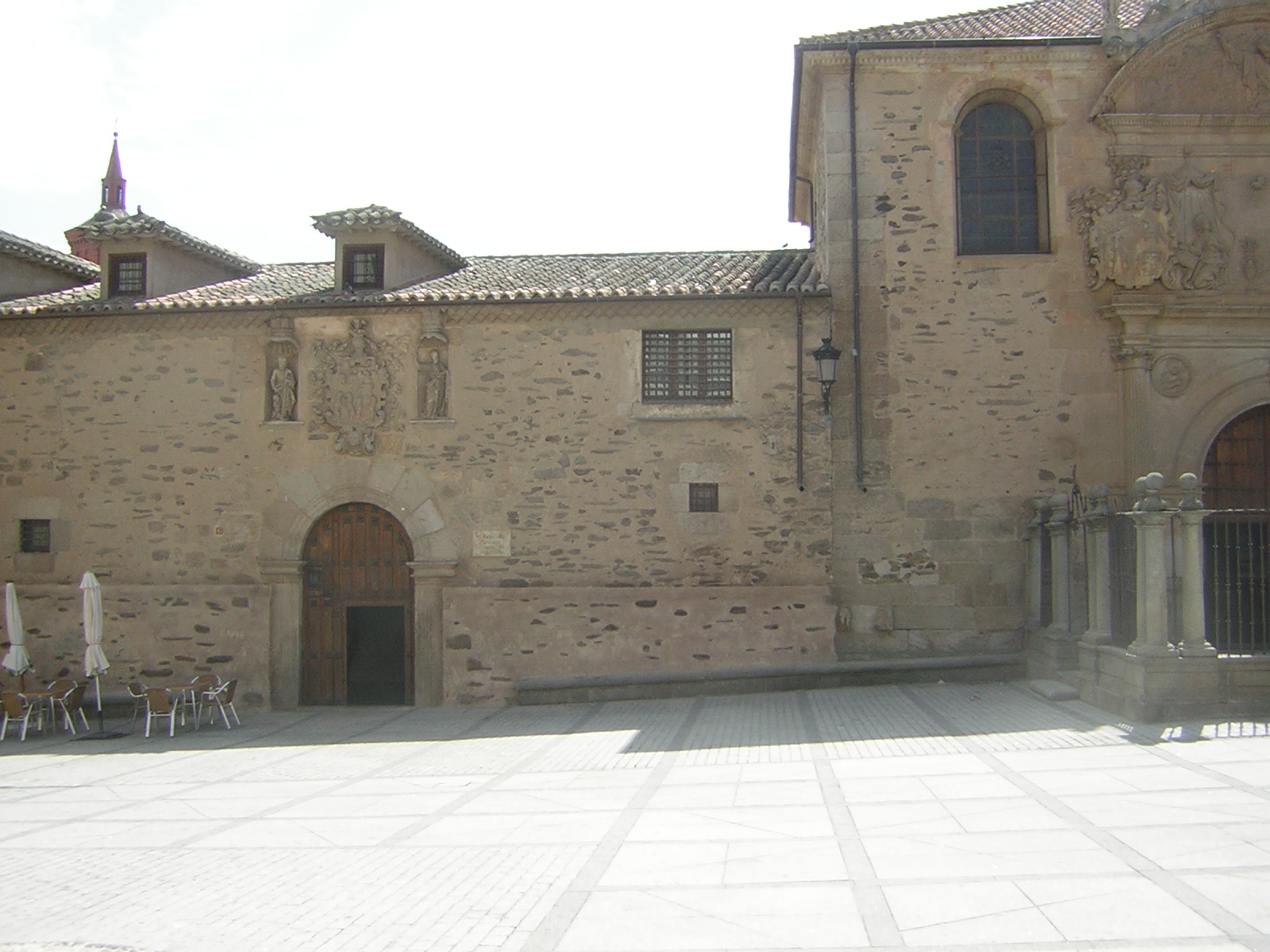
Step through the Arco de la Estrella into the walled old town of Cáceres and you enter one of Europe's most perfectly preserved medieval cityscapes. Declared a UNESCO World Heritage Site in 1986, this extraordinary ensemble of fortified palaces, noble towers, and ancient churches rises from foundations laid by Romans, strengthened by Moors, and crowned by Christian lords who made this frontier city their home. The old town's narrow cobblestone streets wind past granite facades adorned with coats of arms, through intimate plazas where storks nest atop medieval towers, and into churches that have witnessed centuries of prayer. At its heart stands the Co-Cathedral of Santa María, where the Cristo Negro—a haunting 14th-century Black Christ—draws the faithful to venerate one of Extremadura's most beloved images. Beyond the walls, rising 600 meters above the plains to the east, the Sanctuary of the Virgen de la Montaña watches over the city she has protected since the 17th century. Today's pilgrims to Cáceres discover a city where past and present coexist in remarkable harmony. The same walls that once defended against armies now shelter fashionable restaurants and boutique hotels. The same plazas where medieval lords paraded now host festivals that bring the cacereños together to honor their patroness. And the same faith that raised these towers continues to draw believers to venerate the Christ and the Virgin who have shaped this city's spiritual identity.
📜 History & Spiritual Significance
Cáceres traces its origins to the Roman colony of Norba Caesarina, established in 35 BC as a settlement for veterans of the Lusitanian wars. The Romans built the first walls, laid out the streets, and established the civic foundations upon which all subsequent development would rise. The Moors transformed Cáceres during their five centuries of rule, constructing the formidable defensive walls and towers that still define the old town's silhouette. The Almohad period (12th-13th centuries) saw the greatest building activity, with the distinctive tapial walls and defensive towers dating from this era. King Alfonso IX of León conquered Cáceres on April 23, 1229, the feast of St. George, who became one of the city's patron saints. The Christian reconquest brought waves of noble families who built the fortified palaces and tower houses that transformed the citadel into an aristocratic stronghold. The Golfines, Ovando, Ulloa, and other great families vied to construct ever more impressive residences. The Co-Cathedral of Santa María rose between the 13th and 16th centuries on the site of an earlier Romanesque church, becoming the spiritual heart of the Christian city. The city's spiritual life deepened in the 17th century with the establishment of the Sanctuary of the Virgen de la Montaña. When the hermit Francisco Paniagua built his chapel on the Sierra de la Mosca in the 1620s, he could not have imagined that his small image of the Virgin would become the city's most beloved patroness.
☩ Pilgrimage Sites in Cáceres
The old town of Cáceres clusters atop a low hill, its granite towers and fortified walls visible from miles across the surrounding plains. The Sanctuary of the Virgen de la Montaña rises on the Sierra de la Mosca, about 3 kilometers east of the city center.
Co-Cathedral of Santa María
Concatedral de Santa María
The Co-Cathedral rises at the heart of Cáceres' UNESCO-listed Old Town, built between the 13th and 16th centuries. The massive granite building blends Romanesque remnants with Gothic grandeur, its three naves covered by ribbed vaults. The Renaissance bell tower, designed by Pedro de Ybarra and completed in 1559, dominates the city's skyline. The magnificent Plateresque main altarpiece, carved in unpainted cedar and pine by Roque Balduque and Guillén Ferrant between 1547 and 1551, depicts the Assumption of the Virgin.
The most venerated image is the Cristo Negro—the Black Christ—a Romanesque crucifix dating to the 14th century. Now housed in the Chapel of the Blázquez, this solemn figure is the focus of intense devotion during Holy Week. The church was elevated to co-cathedral status in 1957, sharing the episcopal seat with Coria Cathedral.
Sanctuary of the Virgen de la Montaña
Santuario de Nuestra Señora de la Montaña
In the early 17th century, the hermit Francisco Paniagua climbed the Sierra de la Mosca and built a humble chapel among the crags. Bishop Jerónimo Ruiz Camargo blessed the sanctuary on March 24, 1626. The present baroque sanctuary, with its churrigueresque main altarpiece dating from 1726 and attributed to Manuel de Lara Churriguera, replaced the original hermitage.
The Virgen de la Montaña—a polychrome walnut sculpture of the Virgin and Child created between 1620 and 1626—has been the city's patroness since 1906. She was canonically crowned on October 12, 1924. Each spring, the city celebrates the Novenario when the Virgin descends from her mountain sanctuary to the Co-Cathedral.
🕯️ Annual Feast Days & Celebrations
Feast of the Virgen de la Montaña — First Sunday of May
Co-Cathedral of Santa María and Sanctuary of the Virgen de la Montaña. Following the nine-day Novenario when the Virgin dwells in the Co-Cathedral, she returns in solemn procession to her mountain sanctuary. Thousands of cacereños accompany their patroness through the streets, offering flowers, prayers, and the traditional vítores.
Procession of the Cristo Negro — Holy Week
Co-Cathedral of Santa María. The solemn procession of the Black Christ through the candlelit medieval streets represents one of Extremadura's most moving Holy Week traditions.
🛏️ Where to Stay
Hospes Palacio de Arenales & Spa ⭐⭐⭐⭐⭐ — This 17th-century summer residence of the Golfín noble family stands surrounded by centuries-old olive trees about 3 kilometers from the historic center. The 46-room property offers a Bodyna Spa, outdoor swimming pool, and Las Corchuelas Restaurant. Website ∙ Reserve this hotel
Parador de Cáceres ⭐⭐⭐⭐ — Occupying two 14th-century noble palaces—the Casa de Ovando-Mogollón and the Palacio de los Marqueses de Torreorgaz—this state-run hotel places guests at the heart of the UNESCO World Heritage old town. The Torreorgaz restaurant serves traditional Extremaduran cuisine including Ibérico pork with Torta del Casar cheese. Website ∙ Reserve this hotel
NH Collection Cáceres Palacio de Oquendo ⭐⭐⭐⭐ — A 16th-century stone palace transformed into an 86-room boutique hotel near the Arab wall entrance to the old town. The Tapería de Yuste restaurant occupies a terrace overlooking Plaza San Juan. Website ∙ Reserve this hotel
More hotels in Caceres on Booking.com →
Accommodation available to book near Caceres. Pilgrim houses and religious guesthouses are listed above — many take bookings directly and do not appear on booking sites.
🚗 Getting There
By Air: Badajoz Airport (BJZ) lies approximately 90 km southwest of Cáceres. Madrid-Barajas (MAD), the nearest major international hub, is approximately 300 km northeast. Car rental is recommended.
By Train: Cáceres railway station has direct connections to Madrid Atocha (approximately 4 hours) and Seville (approximately 4 hours) via Renfe. The station lies about 1 km from the historic center.
By Bus: Avanza and other operators connect Cáceres with Madrid, Seville, and regional destinations. The bus station is located near the railway station.
By Car: From Madrid, take the A-5 motorway southwest toward Badajoz; Cáceres is approximately 300 km (3 hours). From Seville, follow the A-66 north (approximately 260 km, 2.5 hours). The old town is largely pedestrianized; hotels can arrange access and parking.
📚 Further Reading
Books:
Nicole Bukaty. La Via de la Plata and Camino Sanabres: The Camino de Santiago from Seville to Santiago de Compostela and Astorga (Cicerone Pilgrimage Guides) — Guide to the Vía de la Plata, the Camino route through Cáceres to Santiago de Compostela.
Pedro Manuel Alonso Marañón and José Sánchez Herrero. Iglesias de Coria-Cáceres, Plasencia y Mérida-Badajoz — History of the dioceses and churches of the Cáceres region. (Spanish)
Articles & Online Resources:
Old Town of Cáceres — UNESCO World Heritage listing with historical and cultural context.
Cáceres Tourism Portal — Official city tourism website with visitor information.
🔗 Useful Links
Extremadura Tourism – Official regional tourism portal.
Spain.info - Cáceres – Spain's national tourism portal.
🧭 Nearby Pilgrimage Destinations
Guadalupe (130 km east) – Spain's most revered Marian shrine, home to the Black Madonna at the Royal Monastery of Santa María de Guadalupe.
Trujillo (45 km east) – Birthplace of the conquistador Francisco Pizarro.
Mérida (70 km south) – Capital of Roman Lusitania.
Plasencia (85 km north) – Cathedral city on the banks of the Jerte River.
🥾 Pilgrim Routes
Cáceres lies along the Vía de la Plata, the ancient Roman road from Seville to Santiago de Compostela.
🪶 Closing Reflection
"To go on pilgrimage is not simply to visit a place to admire its treasures of nature, art or history. To go on pilgrimage really means to step out of ourselves in order to encounter God where he has revealed himself, where his grace has shone with particular splendour and produced rich fruits of conversion and holiness among those who believe."
*— *Pope Benedict XVI, Address at the Cathedral of Santiago de Compostela, 6 November 2010