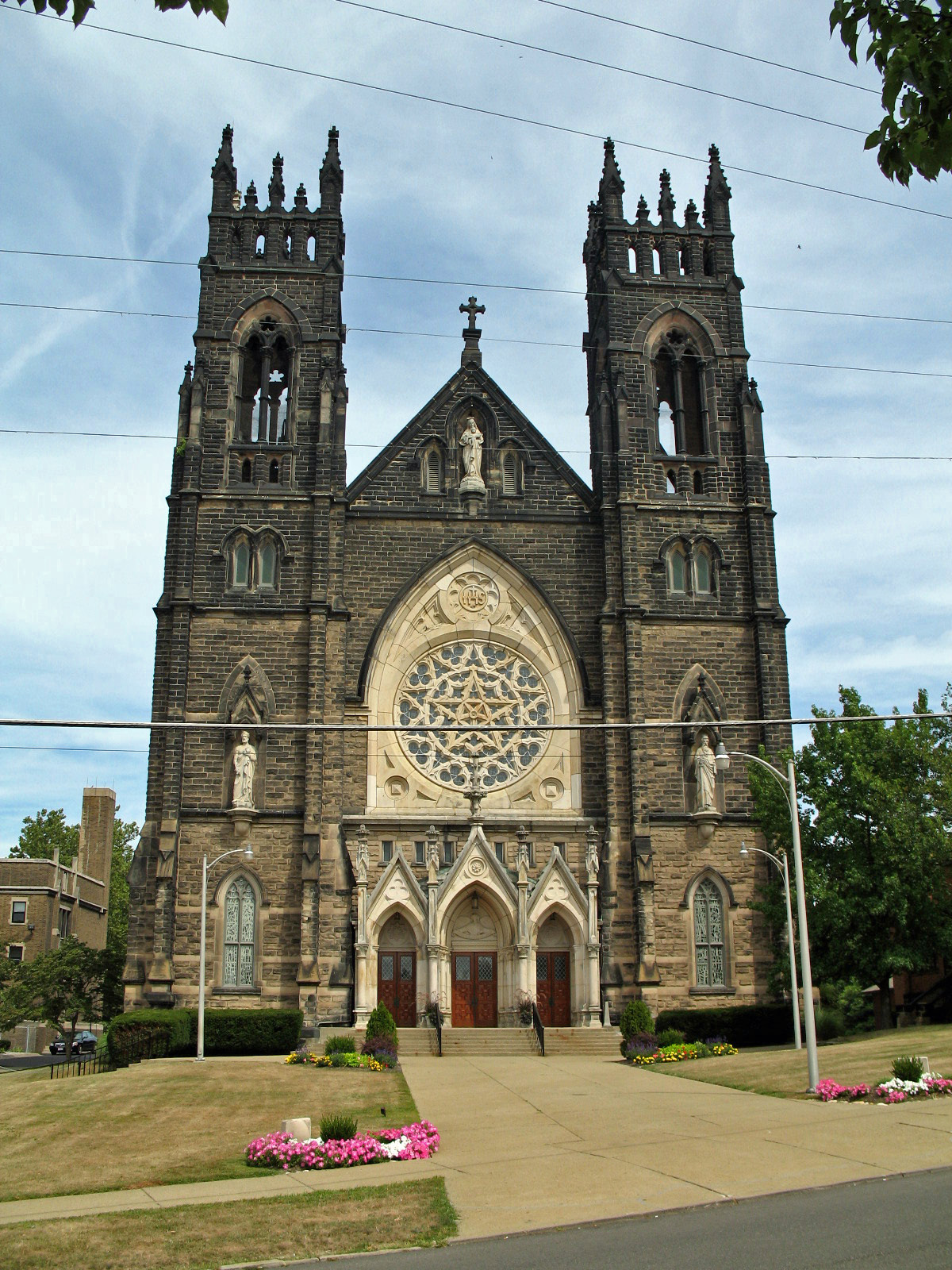
On May 24, 1875, a procession of German-speaking Catholic settlers carried a replica of the miraculous statue of Our Lady of Consolation seven miles on foot from Saint Nicholas Church in Frenchtown to the new parish church in Carey, Ohio. A violent storm surrounded the marchers on every side, yet not a drop of rain fell on the statue or those who bore it. The Miracle of the Rain, as it became known, ignited a pilgrimage tradition in this small Wyandot County village.
The statue itself traces its lineage to Luxembourg, where the original Consolatrix Afflictorum — Consoler of the Afflicted — has been venerated since 1624 as patroness of the City of Luxembourg, with the Duchy following in 1678. Father Joseph Peter Gloden, a Luxembourger priest serving German immigrants in northwest Ohio, obtained a faithful copy from Europe and installed it in a rural mission church. When the statue was transferred to Carey, healings and answered prayers multiplied so rapidly that the small parish could scarcely accommodate the pilgrims. By the early twentieth century, Carey had become one of the most important Marian pilgrimage sites in the United States.
Today the Basilica and National Shrine of Our Lady of Consolation stands as both a Minor Basilica (elevated by Pope Paul VI in 1971) and a USCCB-designated National Shrine, administered by the Conventual Franciscan Friars since 1912. Each August, between five and ten thousand pilgrims converge on Carey for the nine-day Assumption Novena, culminating in a candlelight rosary procession through the streets and an outdoor Mass beneath the gilded Memorial Altar in Shrine Park. The pilgrimage draws an extraordinary range of Catholic communities — Latin Rite, Chaldean, Albanian, and Syro-Malabar faithful worship side by side in multiple languages, united by the conviction that Mary, Consoler of the Afflicted, hears every prayer brought to this place.
📜 History & Spiritual Significance
The story begins in Luxembourg, where a small statue of the Blessed Virgin was placed in a Jesuit chapel in 1624 during a plague that devastated the city. Citizens who prayed before the image reported miraculous healings, and the devotion to Consolatrix Afflictorum spread rapidly. By 1666, Our Lady of Consolation had been declared patroness of the City of Luxembourg, with the Duchy following in 1678. Luxembourger immigrants carried this devotion to northwest Ohio in the mid-nineteenth century, settling the farmland of Wyandot and Seneca counties alongside German, Irish, and French Catholic families.
Father Joseph Peter Gloden, born in Luxembourg and ordained for mission work in America, obtained a replica of the venerated statue and installed it at Saint Nicholas Church in the rural community of Frenchtown, south of Carey. Reports of answered prayers and miraculous cures began almost immediately. When Father Gloden's successor decided in 1875 to transfer the statue to the larger parish church being completed in Carey, the seven-mile procession of May 24 became the founding event of the shrine. The storm that parted around the procession sealed the statue's reputation — pilgrims understood that heaven itself had consecrated the journey.
The Conventual Franciscan Friars assumed administration of the shrine in 1912, bringing the pastoral stability and religious community life that would sustain the pilgrimage through two world wars and the social upheavals of the twentieth century. The current Romanesque church, completed in 1924 with Byzantine-influenced interior tilework by Leon Solon, replaced the original wooden structure (which still stands across the street from the basilica). The right altar houses the miraculous statue; the left altar is dedicated to Our Lady of Sorrows. A lower basilica with confessionals serves the thousands who come during the August novena seeking the sacrament of reconciliation.
Pope Paul VI elevated the church to a Minor Basilica on October 21, 1971, with the decree Quam Prope Assit, recognizing its significance as a national center of Marian devotion. The United States Conference of Catholic Bishops subsequently designated it a National Shrine — one of more than 70 in the country. In 2026, the shrine marks the centennial of the Conventual Franciscan Province of Our Lady of Consolation and the 800th anniversary of the death of Saint Francis, adding jubilee significance to an already rich pilgrimage calendar.
☩ Pilgrimage Sites in Carey
Basilica and National Shrine of Our Lady of Consolation
The main church is a Romanesque basilica completed in 1924, its twin towers visible across the flat Ohio farmland for miles. The upper basilica houses the miraculous replica statue of Consolatrix Afflictorum on the right altar, surrounded by votive candles and the prayers of generations. The left altar is dedicated to Our Lady of Sorrows. The interior features stained glass windows depicting scenes from Marian apparitions and the life of Christ. The lower basilica serves as a chapel for daily devotions and provides confessionals that are staffed continuously during the August novena. The shrine office coordinates group pilgrimages and offers prayer request forms for those who cannot visit in person.
Original 1875 Shrine Church
The wooden parish church where Carey's pilgrimage tradition was born still stands across the street from the basilica, a remarkably intact survivor from the frontier Catholicism of northwest Ohio. Originally named Saint Edward's, it was renamed in honor of Our Lady of Consolation when the miraculous statue arrived in 1875. The church remains in active daily use for early morning Mass and special devotions, offering pilgrims a direct physical connection to the moment when the Miracle of the Rain procession reached its destination and the healings began. Its modest scale and handcrafted character stand in eloquent contrast to the grand basilica built around it — a reminder that the shrine's origins lie not in institutional ambition but in the simple faith of immigrant farmers.
Shrine Park — Stations of the Cross and Memorial Altar
A thirty-acre park located approximately 600 meters west of the basilica, Shrine Park is the destination of the annual August 14 candlelight rosary procession — the climax of the Assumption Novena and the single most attended event of the year. A nearly mile-long outdoor Way of the Cross winds along the park's perimeter road, with fourteen stations marking the Passion narrative amid mature trees and open meadows. The path culminates at the gilded Memorial Altar — a domed structure supported by four marble columns and crowned with a statue of the Blessed Virgin Mary visible for miles across the surrounding farmland. The outdoor altar serves as the site of the Vigil Mass of the Assumption, celebrated under the open sky before thousands of pilgrims holding candles in the August night.
🕯️ Annual Feast Days & Celebrations
Assumption Novena — August 6-14
The nine-day novena preceding the Feast of the Assumption is Carey's defining pilgrimage event, drawing between five and ten thousand pilgrims from across the Midwest and beyond. Ohio bishops lead daily liturgies, and Masses are celebrated in English, Spanish, Chaldean Rite, Albanian, and Syro-Malabar throughout the period. Rosary processions depart from the basilica at 8:00 PM on most evenings (2:00 PM on Sundays). Confessions are available throughout each day, and the shrine remains open around the clock. A significant Chaldean Catholic community from the Detroit and Cleveland metropolitan areas attends annually, with some families maintaining local residences specifically for this event.
Vigil of the Assumption — Candlelight Rosary Procession — August 14
The climax of the novena. At 9:00 PM the miraculous statue of Our Lady of Consolation is carried in a candlelight rosary procession from the upper basilica through the streets of Carey to Shrine Park. An outdoor Vigil Mass of the Assumption follows at the gilded Memorial Altar at approximately 9:30 PM, with Ohio bishops presiding. After Mass, pilgrims process back to the basilica praying the Joyful Mysteries. A separate Vigil Mass is offered inside the upper basilica for those unable to attend outdoors. This is the single most attended night of the year — arrive very early to secure a place in the procession.
Solemnity of the Assumption — August 15
Holy Day of Obligation and the shrine's patronal solemnity. Multiple Masses are celebrated throughout the day in both the upper and lower basilicas. The Assumption feast is the reason the shrine was originally dedicated to Our Lady, and the culmination of the entire August pilgrimage season.
Solemnity of Our Lady of Consolation — May 24-25
Commemorates the historic procession of May 24, 1875, when the miraculous statue was carried seven miles from Saint Nicholas Church in Frenchtown to Carey. An annual reenactment procession follows the original route. May 25 is the Conventual Franciscan liturgical feast of Our Lady of Consolation. A quieter, more intimate pilgrimage than the August events, with significantly fewer crowds and a contemplative atmosphere well suited to walking the seven-mile route.
Portiuncula Indulgence — August 1-2
As a Conventual Franciscan-administered basilica, Our Lady of Consolation qualifies for the Portiuncula plenary indulgence, available from noon on August 1 through midnight on August 2 at any Franciscan church worldwide. Conditions: sacramental confession (within twenty days), Holy Communion, and prayers for the Pope's intentions. The indulgence falls days before the Assumption Novena begins, making it easy to combine with an early arrival for the August pilgrimage season.
Sunday Shrine Devotions — Every Sunday after 11:00 AM Mass
Weekly devotion held immediately after the 11:00 AM Sunday Mass year-round (except Christmas and Easter). Includes a hymn to Our Blessed Mother, enrollment into the Confraternity of Our Lady, the Litany, individual prayer, and a blessing with the Relic of the True Cross. Pilgrims who cannot visit during major feast seasons will find this weekly devotion a meaningful encounter with the shrine's Marian tradition.
🛏️ Where to Stay
Carey itself has no hotels — it is a village of approximately 3,500 residents. The closest accommodations are in Upper Sandusky (21 km), Tiffin (29 km), and Findlay (32 km). Book well in advance for the August Assumption Novena.
Quality Inn Upper Sandusky ⭐⭐ — Closest bookable hotel to the shrine, 13 miles away in Upper Sandusky. Indoor pool, free WiFi, and free parking. Reserve this hotel
Royalton Inn & Suites Upper Sandusky ⭐⭐ — Comfortable inn with indoor pool and spa bath in Upper Sandusky, one of only two hotels within 25 km of the shrine. Reserve this hotel
Drury Inn & Suites Findlay ⭐⭐⭐ — Off I-75 in Findlay, 20 miles from the shrine. Free hot breakfast, free evening meals, and indoor-outdoor pool — excellent value for pilgrim groups. Reserve this hotel
The Hancock Hotel ⭐⭐⭐⭐ — Boutique hotel in downtown Findlay, 20 miles from the shrine. Houses Mancy's Steakhouse; rated 9.6/10. The best option for a comfortable pilgrim retreat. hancockhotel.com · Reserve this hotel
Hampton Inn Findlay ⭐⭐⭐ — Reliable Hilton-brand hotel in Findlay with indoor pool, free breakfast, and pet-friendly policy. Reserve this hotel
TownePlace Suites by Marriott Findlay ⭐⭐⭐ — Extended-stay property with full kitchens and free breakfast, suitable for multi-day pilgrimages. Reserve this hotel
Hampton Inn Tiffin ⭐⭐⭐ — Modern hotel in Tiffin, 18 miles northeast of the shrine. Free breakfast and all rooms include refrigerators and microwaves. Reserve this hotel
Holiday Inn Express Tiffin ⭐⭐ — Budget-friendly option in Tiffin, 18 miles from the shrine. Free breakfast and standard amenities. Reserve this hotel
More hotels in Carey on Booking.com →
Accommodation available to book near Carey. Pilgrim houses and religious guesthouses are listed above — many take bookings directly and do not appear on booking sites.
🚗 Getting There
By Air: Toledo Express Airport (TOL) is the nearest commercial airport, approximately 60 km northwest of Carey; rent a car and drive approximately 40 minutes via I-75 South and OH-15 East. Columbus John Glenn International Airport (CMH), 130 km south, offers the widest flight selection; approximately 1 hour 20 minutes by car via US-23 North. Cleveland Hopkins International Airport (CLE), 190 km northeast, is a major hub; approximately 2 hours 10 minutes by car via I-71 South and US-224 West.
By Train: Toledo Amtrak Station (TOL) is the nearest rail stop, served by the Lake Shore Limited (Chicago-New York/Boston) and Floridian (Chicago–Miami) routes. From Toledo, rent a car for the 60 km drive to Carey — no public transit connects the two. Approximate rail times to Toledo: 4 hours 30 minutes from Chicago, 1 hour 30 minutes from Cleveland, 15 hours from New York Penn Station.
By Car: From Toledo, take I-75 South to Exit 156 (south of Findlay), then OH-15 East into Carey — approximately 40 minutes. From Columbus, drive US-23 North directly to Carey — approximately 1 hour 20 minutes. From Cleveland, take I-71 South to US-224 West, then US-23 South into Carey — approximately 2 hours 10 minutes. From Detroit, follow I-75 South through Toledo — approximately 2 hours. From Pittsburgh, take I-76 West (Ohio Turnpike) toward Cleveland, then I-71 South and US-224 West — approximately 3 hours 30 minutes. Day parking only on shrine grounds; no overnight parking permitted (vehicles left overnight are towed). Arrive early during the Assumption Novena (August 6-15) due to heavy traffic.
Local Transport: Carey has no municipal bus system or rideshare infrastructure. The shrine campus — basilica, gift shop, cafeteria, and retreat center — is compact and walkable. Organized parish and diocesan bus pilgrimages are available across Ohio; contact the shrine office via olcshrine.com to coordinate group visits.
📚 Further Reading
Brother Jeffrey Hines, OFM Conv., A History of the Basilica and National Shrine of Our Lady of Consolation 1868-1979 — The original history of the shrine by a Conventual Franciscan friar who served at Carey for over thirty years, covering the shrine's Luxembourg origins and development through 1979.
Brother Jeffrey Hines, OFM Conv., ed. Brother Joseph Candel, A History of the Basilica and National Shrine of Our Lady of Consolation 1868-1993 — Expanded edition covering 125 years of pilgrimage at Carey, including the shrine's elevation to Minor Basilica in 1971.
Marion Amberg, Mary's Miracles: A Traveler's Guide to Catholic America — Covers over fifty Marian shrines across the United States; devotes eight pages to the Basilica of Our Lady of Consolation in Carey with history, miracles, and visitor information.
Marion Amberg, Monuments, Marvels, and Miracles: A Traveler's Guide to Catholic America — Guide to over 500 Catholic holy sites organized by state, including Ohio destinations. Published by Our Sunday Visitor.
🔗 Useful Links
Basilica and National Shrine of Our Lady of Consolation — Official Website — Mass schedules, event calendar, pilgrimage information, prayer requests, and shrine history.
Conventual Franciscan Friars — Shrine Profile — The Franciscan order's page on their administration of the shrine since 1912.
Diocese of Toledo — Assumption Novena — Diocesan event page for the annual August novena with dates and bishop participation.
GCatholic — Basilica and National Shrine — Canonical database entry with designation history, diocese, and construction dates.
The Catholic Travel Guide — Carey, Ohio — Pilgrim-focused destination guide with visitor practical information.
Basilica and National Shrine of Our Lady of Consolation — Wikipedia — History, architecture, and the Miracle of the Rain.
OLC Shrine Gift Shop — Online store selling rosaries, statues, medals, and shrine-specific devotional items.
🧭 Nearby Pilgrimage Destinations
Champion (286 km) — The National Shrine of Our Lady of Good Help in Champion, Wisconsin — the only Marian apparition site in the United States approved by the Catholic Church, where Adele Brise received three visits from the Blessed Virgin in 1859.
Emmitsburg (397 km) — The National Shrine of Saint Elizabeth Ann Seton and the National Shrine Grotto of Our Lady of Lourdes in Emmitsburg, Maryland, twin pilgrimage sites in the Catoctin Mountains.
Baltimore (477 km) — The Basilica of the National Shrine of the Assumption of the Blessed Virgin Mary, the first Catholic cathedral built in the United States, designed by Benjamin Henry Latrobe in 1806.
🪶 Closing Reflection
"Ever since her Assumption into Heaven she has showered joy upon the whole world, she has become the great Consoler: our Mother who communicates joy, trust and kindness."
— Pope Benedict XVI, Homily at Santa Maria Consolatrice, Rome (2005)
.jpg)